


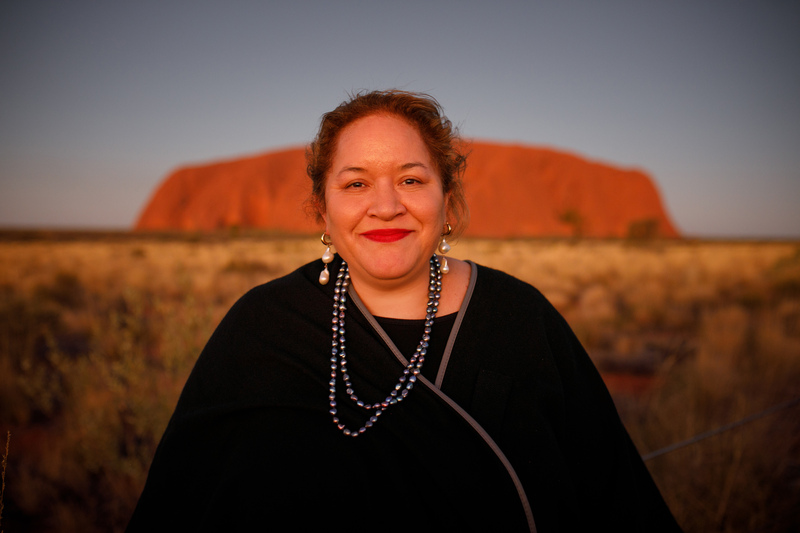
When it came time for Megan Davis to cast her vote in the Voice to Parliament referendum in 2023, she did so at Eagleby.
The smell of spring and democracy sausages hanging in the air.
It was perhaps a full circle moment for one of Australia’s most prominent constitutional lawyers, who grew up in a housing commission down the road from the very polling booth where she voted.
The act was deceptively simple: mark either ‘Yes’ or ‘No’ on the ballot paper, slide it into a cardboard box and walk away. Just as millions of others did that day.
But for Ms Davis, the architect behind what some have described as Australia’s most ambitious push for equality, the quiet moment carried the weight of more than 200 years of colonisation and 60,000 years of survival.
For her, it represented a decade of painstaking hard work. The moment was personal.
So when the referendum failed, the pain cut deeper than disappointment.
“I thought of the old men and women who grew up in reserves and missions under Australia’s lengthy period of compulsory racial segregation,” Ms Davis said.
“They’ve been through a lot in their lifetime, and many will die unrecognised by the country that segregated them on the basis of race.”
A professor and Pro-Vice Chancellor Society at the University of New South Wales, Ms Davis has become a beacon of hope for First Nations people.
From playing handball in the streets of Eagleby to travelling the world as an expert for the United Nations – her CV is one for the ages.
She has received Australia’s highest civilian honour, a Companion of the Order of Australia, and rubbed shoulders with the academic elite of the United States, where she serves as a visiting professor at Harvard University.
In 2023, TIME Magazine named her one of the world’s next generation of global leaders.
But when you cut through all the high profile roles and recognition, Ms Davis is undeniably and unabashedly Logan.
Privilege, nepotism, a silver spoon – these are pleasures not afforded to her growing up.
They’re descriptors that can’t be thanked for her success.

Conversely, Ms Davis rose up from “the underclass”. But she remembers only the best from her childhood.
“All of my memories are fond. Playing footy on the street and playing handball. Walking to school, playing netball at the Beenleigh courts, the local Beenleigh library and swimming laps at the Beenleigh pool and Eagleby pool.
“Any child who grows up in poverty knows that being poor shapes their life and experiences. And working in the places I work, there aren’t many people with my childhood, so there were many barriers around mindset, and not having money to fall back on.”
Growing up, Ms Davis had a fascination in what some would call the mundane. The fact she read the Australian constitution at age 12 says it all.
But like a lot of kids, she loved sport.
Actually, she was obsessed with it, and now plays a role in the Australian Rugby League Commission, where she oversees the NRL, Kangaroos and State of Origin series.
Her sense of justice and equality was instilled in her at a young age.
Some of it came from pain – like holding papers from the Queensland State Archives that detailed the compulsory racial segregation inflicted upon her family and others.
But not all of it.
Her greatest influence? She says her mum, Dawn, who still lives in the very home she raised her five children in.
“Her mind is remarkable; she’s brilliant,” Ms Davis said.
“Mum always instilled in us a sense of community and the idea or value that you should give back to the local community. We, as children, had the benefit of living in an Australia that allowed for social mobility through schooling, higher education, universal healthcare and the welfare net that catches people when they need help.
“And so Mum was always of the belief that you should give back to the community, especially those less fortunate, and that’s always driven me.”

It is a lesson Dawn’s children took seriously.
Ms Davis’ brother Willie still plays cricket for Logan Village Cricket Club, and is the CEO of the Beenleigh Housing and Development Company. Another brother, Johnny, works in higher education. Her third brother, Alfie, works for the Institute for Urban Indigenous Health. And her sister Lucy works for the new Member for Forde, Rowan Holzberger.
“Everyone is working in caring professions for the local Logan community,” Ms Davis said.
Although she’s now a big name in the advocacy and academic spaces, Ms Davis manages to return to her first home often.
It’s a place that keeps her grounded. Somewhere she can see family, play with her many nieces and nephews, and read a book or two – if she can find some peace and quiet.
And while the biggest push of her career to date – the Voice referendum – failed. Her drive for change has not.
It was merely a “setback”, she says.
“I am confident. Progress is always possible.”