


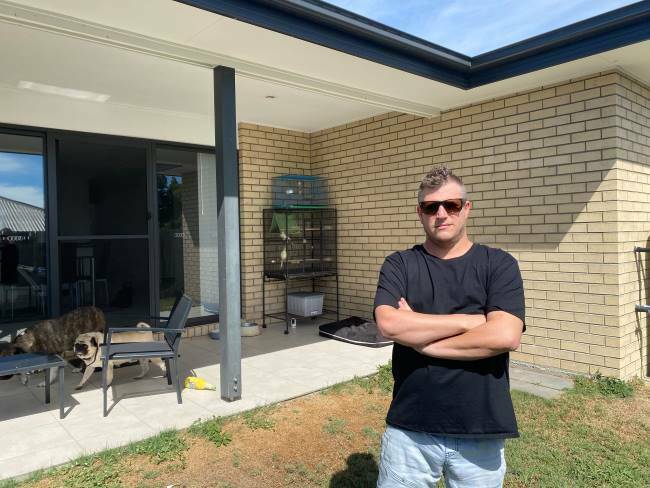
Logan tenants suffering sharp rental increases will be relieved by a state government proposal to increase restrictions on rental price rises.
But some local real estate agents say it’s not enough.
Under new legislation, limitations will be changed so rental costs can only be raised once a year.
Currently, Queensland has been behind most other jurisdictions in the country by allowing landlords to raise prices once every six months.
In Victoria, South Australia, Tasmania and the ACT, rent can only be raised once a year, in most cases.
This is the same for NSW fixed-term agreements of two years of more.
Local agent Michael Wardlaw said these limits won’t fix the core issue, which is a lack of available rentals.
According to Mr Wardlaw, there was a decrease in rental properties available following 2021 law changes in favour of tenants.
He said landlords were not “raising rents for fun”.
“The average landlord is just an average mum and dad who have a second property only if they can make their repayments,” Mr Wardlaw said.
He said with interest rates rising so heavily, a lot of landlords had no choice but to increase rent.
Laken Seymour, who rents in Browns Plains, is a recent victim of rent spikes.
“I’ve always had a 12-month lease so rises have never affected me too badly,” Ms Seymour said.
But Ms Semour recently signed a six-month lease and suffered a hefty increase.
“It’s been a hard,” she said.
However, like Mr Wardlaw, she said reducing the frequency of increases was not the solution.
Ms Seymour said the government should instead put a cap on the amount the rent can increase.
“I think most leases are 12 months anyway… so a cap [on rental prices] would be more beneficial to renters,” Ms Seymour said.
Ms Seymour’s friend and fellow renter, Steve Lewin, agreed.
Mr Lewin recently moved out of his home because of a sudden rent increase.
“The owners were going to build a granny flat to rent out so we weren’t going to have any backyard,” Mr Lewin said.
Hr and his partner could not justify the steep price, so they moved.
Unfortunately, their new place is barely within their means.
“Everything is really tight these days so I think a cap on prices would be the best move,” Mr Lewin said.
In some other jurisdictions, rental prices are restricted by the consumer price index (CPI).
For example, in the ACT rent cannot be increased more than 10 per cent above CPI.
But Mr Wardlaw said even this won’t be enough.
“Limiting rent increases is not the solution to the issue, and nor is placing a cap on rent prices,” Mr Wardlaw said.
He said government housing was the only solution.
The state government continue to invest more money into affordable housing.
“Since coming to government in 2015 we have commenced more than 5,000 new social and affordable homes and we’re on track to commence 13,000 by 2027,” the minister for communities and housing, Leanne Enoch, said.
“In addition to this, the government has created an historic $2 billion Housing Infrastructure Fund which will create a permanent income stream which will be used to deliver more social housing in years to come.”
Although this is a potential long-term solution, Ms Enoch recognised the immediacy of the issue.
“The relationship Australians have with housing has been changing over the years, with an increasing proportion of people renting, and renting for longer,” she said.
“Rental laws need to keep pace with this changing relationship which is why we’re committed to an ongoing rental law reform agenda.”