


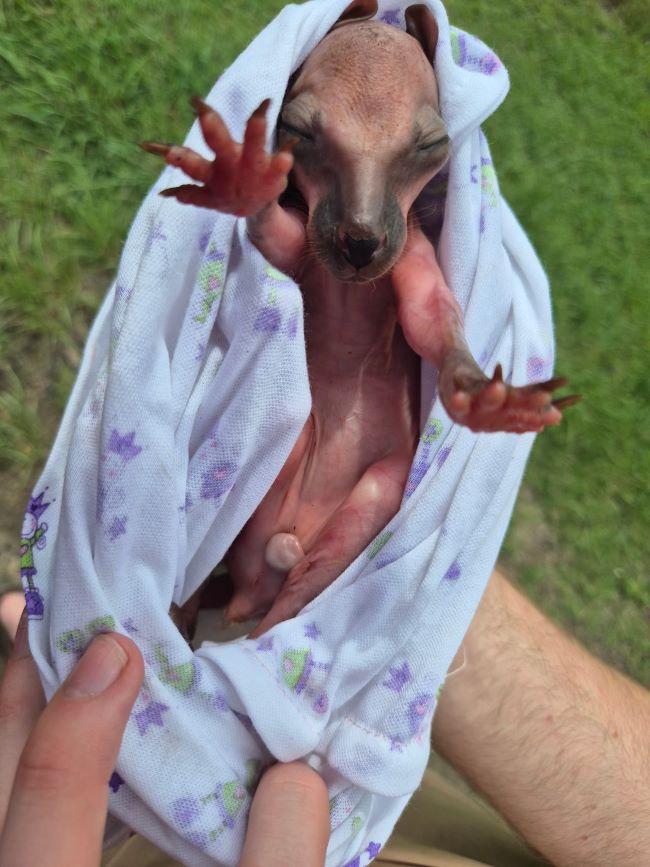
At the side of a road, what looks like a dead kangaroo or wallaby can still be carrying a life.
That is the reality Rotary Club of SEQ Wildlife Rescue volunteer Mel Dunne faces through Logan’s cooler months, when later dawns, earlier sunsets and peak-hour traffic combine into trauma season.
Between 1 May and 21 May, Ms Dunne said she attended 47 kangaroos and wallabies, along with a koala, kookaburra, echidna, lorikeet, crow, barn owl, possums, tawny frogmouth, goshawk and hares.
Among them was a red-necked wallaby joey, now in care after its mother was hit by a car and died from her injuries.
The joey was found only because a member of the public called for help.
Ms Dunne said that call can be the difference between an animal being left unseen and a joey getting a chance to survive.
“The main thing the public can do is just make that call,” she said.
“We always say accidents happen, but what you do next defines you.”
Ms Dunne said this year’s trauma season had started earlier than usual.
“This year it started earlier,” she said.
“Dawn is later, dusk is earlier.
“People are going to work, or coming home, at this time and the animals are on the move.
“In summer the animals have already crossed the roads as the sun is up before people head out for the day.”
In winter, the first callout could come around 5.30am and continue until 10pm or later.
Ms Dunne said the best thing people could do was call a wildlife rescue service and give the clearest possible location, even if they could not stop.
“Call someone. That’s it,” she said.
“If they can stay, that’d be brilliant. But they don’t have to, we understand that people are on the move.
“But if they spot something, just call someone.”
Ms Dunne said drivers should not assume an animal was uninjured simply because it moved away after being hit.
Adult kangaroos and wallabies often suffered broken legs in collisions, she said, but could keep moving on adrenaline.
“People say, ‘I hit this kangaroo and it just took off. It kept going, it’s fine.’ No — the adrenaline causes them to keep jumping on those broken legs,” she said.
“Once they stop, the adrenaline leaves the body and that’s when they sit there and lay to die.”
She said injured animals could be left unseen and unchecked and, in some cases, still carrying live young.
That was why roadside kangaroos and wallabies should still be reported if they did not have a cross marked on them.
Rescuers use a painted cross to show an animal has been checked for signs it may still be alive or carrying pouch young.
“Unless it’s got that cross on it … they have not been checked,” Ms Dunne said.
Repeated strike areas included Yarrabilba, Tamborine and Greenbank, with regular callouts to Teviot Road, Greenbank Road, Mundoolun Road and Waterford-Tamborine Road.
Ms Dunne said residents should not assume someone else had called if an animal had not been marked.
For sick or injured wildlife, Logan City Council lists the RSPCA Wildlife Ambulance on 1300 264 625 (1300 ANIMAL) between 7am and 7pm, or 24-hour volunteer contacts including Wildcare Australia on 5527 2444 and Rotary Club of SEQ Wildlife Rescue on 0467 231 952.
Subscribe to stay up-to-date with news from across Logan. You’ll receive a link to our digital newspaper direct to your inbox each week. It’s free.
Follow MyCity Logan on Facebook and Instagram