


AT least one school principal believes school lockdown in 2020 has sharpened the skills of teachers who are looking at developing new ways of learning.
Dan Walker is principal of Canterbury College, which recently was named in Australia’s top 50 most innovative schools.
The school has partnered with Microsoft to explore the latest in technology – not only how to use it, rather to collaborate in ways that make it accessible to all school disciplines.
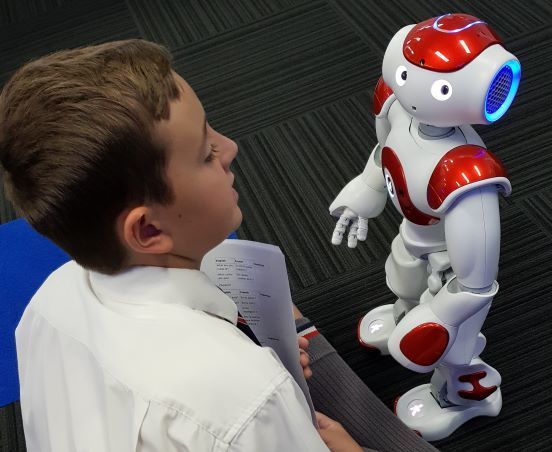
Robots, for example, react to commands from children. But language teachers have found ways to use the robots to teach songs in Spanish.
Virtual reality, augmented reality and artificial intelligence are all common place within the school curriculum.
Learning and Innovation director James Jenkins is a chemistry teacher. Science has a logical link with technology, but he says some of the more traditional disciplines – particularly humanities units – are finding ways to tap into technology.
“Imagine putting on a headset which takes you into the lift of the colosseum and learning about how the ruins came to be,” Mr Jenkins said.
“It’s a lot more interesting than turning the pages of a book.”
Young children are learning how objects can be replicated by 3-D printers.
Mid-school students are spending two hours every Friday in “Spark” lessons. These are highly-specialised elective subjects created by teachers who have highly-specialised interests – philosophy, sports psychology, photography, dance and food just a few of the Semester 2 options.
One boy’s parents were renovating his room, so he learned how to create a virtual design of the perfect bedroom.
For those in higher grades, it’s about normalising technology so there are no surprises in the outside world.
“A lot of schools do things the same way they’ve done them for a long time,” Mr Jenkins said.
“The innovation we’re trying to explore is ‘how’ to use technology in modern learning, and to create an emotional connectedness to what the students are learning.”
Mr Walker said a number of teachers at the school were embracing innovative techniques into their daily learning.
And he was adamant the pandemic had helped.
“Everyone has kept one, two, three, 50 little skills from remote learning and taken them for a spin into normal teaching,” he said.
“A lot have taken the ‘Teams’ culture immediately into their daily face-to-face teaching. It has showed what kids are capable of when set a task to learn independently.”
Mr Walker said modern-day reality was that teachers were competing for attention spans of teenagers drawn to video games and Netflix.
Innovative learning techniques ensured students remained interested in their studies, and applied themselves to positive outcomes, creating productive pathways to a future outside the school boundaries.