


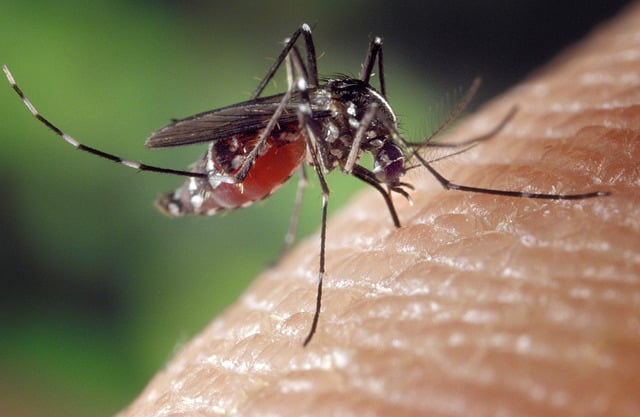
WITH more wet weather likely to be on the way and coupled with the summer heat, the fight against mosquitoes continues.
And while council sprays the suburbs, the mayor also wants people to pitch in.
That’s why mayor Darren Power says council is not only launching a comprehensive surveillance campaign, but is also looking to enhance awareness.
Logan City Council has an ongoing citywide treatment and monitoring program aimed at minimising the discomfort and dangers posed by the blood-sucking pests.
“We want to educate and help protect the community from potentially deadly mosquito-borne viruses,” Cr Power said.
“Council is launching this proactive campaign as we want to get ahead of any potential threats and help residents enjoy this summer and stay healthy.”
The council’s lifestyle chair Laurie Koranski said Logan was working with neighbouring councils through the recently formed South East Queensland Mosquito Taskforce.
“We have joined forces to mitigate any significant exposure of residents to mosquitoborne public health risks,” Cr Koranski said.
“It is important we stop these mozzies early in the breeding cycle to protect the community wherever possible, particularly with the emerging threat of the Japanese Encephalitis virus (JEV) on top of the more widely known Ross River virus.”
JEV was declared a communicable disease of national significance in March but has not been detected in the City of Logan.
Ross River is a virus endemic to Australia, Papua New Guinea and some South Pacific islands that is spread through mosquito bites.
It causes fever, rashes and joint pain.
Council regularly inspects more than 760 water holding sites across the city in an effort to protect residents against emerging public health risks.
Officers will use a range of techniques to treat potential adult mosquito larvae sites in an around-the-clock program.
This includes using drone and all-terrain vehicles to treat difficult-to-access areas.
Real-time heat mapping will also be used to identify any increase in adult mosquito populations in known breeding sites.
People are asked to take steps to help reduce mosquito breeding.
Suggested actions include:
• Tip out any water that has gathered in items such as wheelbarrows, garden pot saucers or tarpaulins.
• Avoid outdoor activity, when possible, during the early morning and late afternoon. If you need to go outside, wear light-coloured long-sleeve shirts and long pants.
• Apply insect repellent (preferably containing DEET).