


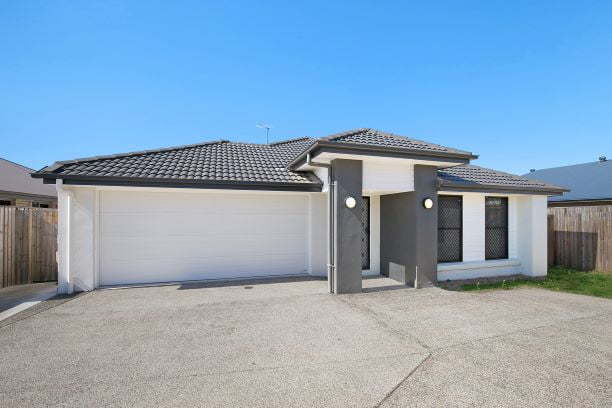
Up to 30 or 40 people are inspecting a single property in Logan, something agents say is unheard of in this neck of the woods.
“You know when there’s a kids’ birthday party and parents are queued up down the street for pick up,” one agent said. “Well, that’s what it’s like now at a rental inspection.”
There are stories of people holed up in caravans while they wait to be approved for a property. There are stories of people in sleeping bags.
But one caravan park owner put it in perspective, saying there weren’t long queues to stay in short-term rental accommodation. Nor were there any “tent cities” in Logan.
There is however, unquestionably a short supply of rental properties.
Ray White Marsden principal Avi Khan said there were less than 1% vacancies in the Logan region.
Some people were offering six months’ rent in advance in an attempt to secure properties. Some were offering $10 or $20 more per week in their bid to find the right rental home.
Agents agree they’re tactics unlikely to upend good references and a sound rental history.
“Owners want good tenants,” they said.
Mr Khan said he’d seen a sharp rise in the residential sales market, or a sharp rise in the rental market. But not both at the same time, as is the case now.
Local Property Team co-owner Brennan Hill said the trend in Logan was the same as surrounding areas, which was unusual in itself.
As a lower-priced region, Logan wasn’t usually part of the inner-city rental crisis which ebbs and flows.
“Prices for rental properties have been driven up and we’re seeing record prices,” he said.
“Interestingly, investors are noticing that as well. There are yields like never before and that’s being magnified in Logan. Banks might be reluctant to approve loans, but cashed up investors are going to Logan right now.”
Mr Hill said most areas were seeing about 5% of properties being sold to investors. The remainder were being sold to those looking for their own home to live in.
In Logan however, the trend was quite different – 70% home/occupier versus 30% investor interest.
“We saw a sharp increase in interest during the last quarter of last year, and that has continued into January,” he said.
Homes with low purchase prices would see positive gains in the short, medium and longer term, he said.
A lack of stock wasn’t an issue, he said. It gives a previously under-priced Logan region time to catch up with the rest of the market in surrounding “shires”.
“I’d much rather a market which is not getting listings, than a market that is not getting buyers. It’s much better putting a property on the market for two weeks knowing it’s going to get sold than having it sit around for three months amid certainty,” he said.
“Anyone who’s been in the industry longer than five years will tell you that.”
Mr Khan said it was a great time for investors and sellers.
“This is unheard of,” he said.
“We’re all riding the wave at the moment. We love the growth, but I think we’d all prefer stable growth.
“It’s a drastic turnaround. During Covid, we were looking at a downturn, but through six months it’s gone full circle.”
In terms of rentals, both agents said prices were rising sharply due to the higher demand.
With that comes potential social issues, homelessness and poverty.
Everybody’s Home, a national campaign to end homelessness, says despite measures rolled out to mitigate the impacts of the pandemic, including eviction moratoriums, temporary increases to income support payments and emergency accommodation programs, housing security is about to rapidly worsen for many Australians.
“Temporary income and eviction protections are due to be phased out at a time when unemployment is set to peak at around 8%, and without new measures homelessness and housing stress will rise,” said Everybody’s Home spokesperson Kate Colvin.
“Renters were hit much harder by Covid than homeowners, particularly in locations where rents increased even as unemployment soared. This will only get worse, and especially so in regional Australia.
“Compared with the situation at the start of the pandemic the number of households suffering housing stress will increase anywhere from 5% to 18% depending on the severity of the recession.”