


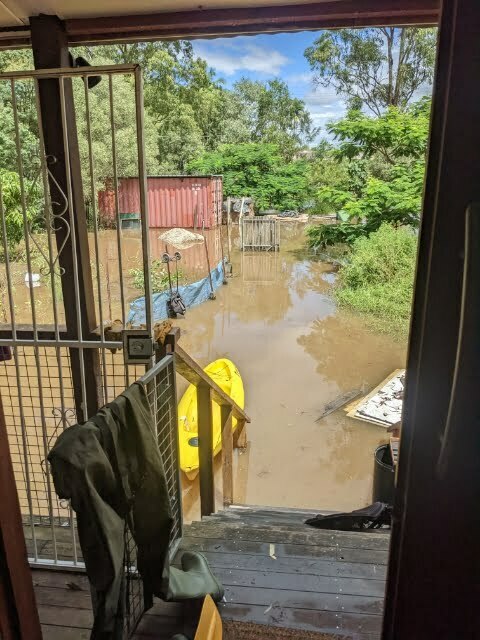
Foster mum of four Trish Thompson evacuated from her family’s Munruben home last Monday night.
She was shocked how quickly the situation turned dangerous while they were sandbagging in the evening.
“Like 20 minutes later I sung out, ‘there’s water coming up through the floorboards, and by the time I said that it was up near my ankles,” she said.
“We had no hope.”
By Tuesday last week, the evacuation centre was hosting around 20 people. Those numbers grew as roads reopened and word got around about it.
Logan City Council estimated last week that up to 200 homes were at risk of being inundated.
As of Monday last week, council estimated about 60 homes had been impacted.
That number could be higher with council relying on people to self-report inundations to inform flood impact assessments.
Run by the Red Cross, the centre had psychological first aid people on site, caterers offering three meals a day, police security, chaplains, warm showers, and the SES provided sleeping and living equipment. Free animal care was also available off site for pets.
The floor was divided into sections for single men, single women, and families.
ChaplainWatch chaplain Jesse Webb said the floor could be expanded to hold between 200 and 300 people.
“It works as a modular system, so we can keep adding extra flooring, tables and beds as more people come in,” he said.
“We’re offering breakfast, lunch and dinner, so people can have a hot meal, fresh sandwich or something like that, which of course is such a big deal when people are feeling unsafe.
“A bit of hospitality goes a long way to calming nerves and ensuring people feel cared for an at home.”
Mr Webb said part of the challenge of running an evacuation centre is getting people to come forward for assistance, whether it is because they are embarrassed to ask for help or they underestimate the severity of their situations.
“You don’t have to be the worst off person to have help,” he said.
Council’s animal management team were on standby to look after people’s pets for two weeks.
“One of the things that happens in evacuations is people don’t want to leave animals – they are part of their family, right?” Mr Webb said.
“If they don’t know their animals are safe they’ll sleep in a car or they won’t come to an evacuation centre – they’ll stay where their animals are.”