


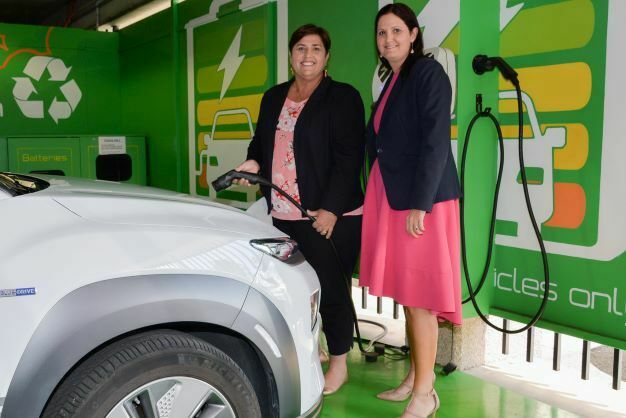
Logan City Council wants half its passenger fleet of cars to be electric or hybrid by 2026.
A roadmap to a sustainable fleet of vehicles is intended to boost the city’s eco-friendly intentions.
“Through the strategy we will also be responding to Queensland and Commonwealth emissions targets and supporting Queensland’s target to achieve zero net emissions by 2050,” Logan councillor Natalie Willcocks said.
“We plan to further reduce Council’s energy costs and carbon footprint through innovation and new technology.
“Council has a proud history of environmental action, strategy and leadership and we hope the Green Fleet Strategy will inspire other local governments to progress their sustainable fleet initiatives.”
Under the strategy council aims to achieve a 20% reduction in pollution and waste by 2026.
All passenger vehicles purchased will be rated against the Green Vehicle Guide’s CO2 emissions meter and must achieve 10 litres or less fuel consumption for each 100kms.
Governance Deputy Chair Councillor Karen Murphy said as a major user of fleet, plant, fuel and oils, it was important for Council to deliver positive changes to the environment both directly and indirectly.
“Sustainability needs to be firmly embedded into our way of thinking about fleet management practices as Council’s vehicles and plant play an active role in delivering services to the community,” Cr Murphy said.
“The Green Fleet strategy will bring benefits to our community and the environment through cleaner air with less polluting emissions.
“It will also help to preserve resources through the use of more renewables and encourage green behaviours to increase awareness and sustainable practices.”
The strategy is underpinned by four targets including:
• Manage, minimise, and control air pollutants and waste from vehicles, plant
and infrastructure used in Council operations;
• Manage driver and vehicle behaviour that directly impact emissions;
• Develop energy reduction strategies and continuously review the viability of
alternative energy sources, and;
• Drive cultural change, training and education.
A list is currently being compiled of potential Council sites which could house charging facilities for electric vehicles.
Efficiency savings will help to fund the sustainable fleet initiatives and projects.