


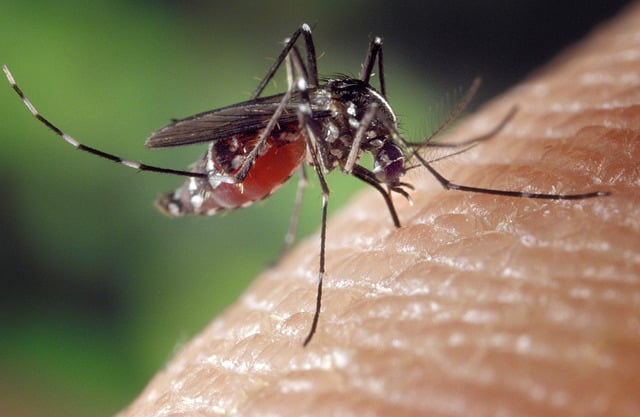
As well as aerial spraying, council’s mosquito-eradication campaign will involve sourcing extra equipment to allow teams to reach more areas for treatment. Council will also increase stockpiles of mosquito-control products.
Council has sought expert advice from Queensland Health entomologists.
And an approach has also been made to surrounding local councils to formulate a consistent response on mosquito controls.
JEV (Japanese Encephalitis Viris) has been declared a communicable disease incident of national significance.
Mayor Darren Power said while no cases of JEV had been reported locally, there was potential risk to the public due to the recent wet weather.
“To combat this Council will ramp up around-the-clock efforts to survey and treat potential adult and mosquito larvae sites across the city using a range of techniques.”
As well as aerial spraying, council’s campaign will involve sourcing extra equipment to allow teams to reach more areas for treatment. Council will also increase stockpiles of mosquito-control products.
Residents also have a responsibility to take immediate steps to control mosquito breeding on their own properties, but experts will be chipping in with advice and support.
Residents should:
• apply insect repellent (preferably containing DEET)
• use physical barriers, such as nets on prams and cots
• avoid outdoor activity when possible during the early morning and late afternoon as mosquitos are more active
• wear clothing that limits skin exposure
• ensure insect screens on doors and windows are intact
• empty any water in containers or saucers around the yard.
Native fish can also be provided free-of-charge to residents to help with mosquito control in dams and ponds.
In the meantime, Logan City Council has also begun a recovery program to restore playgrounds, facilities, pathways and trails in the city’s parks.
An extended mowing program, which now includes Saturdays, has been introduced.