


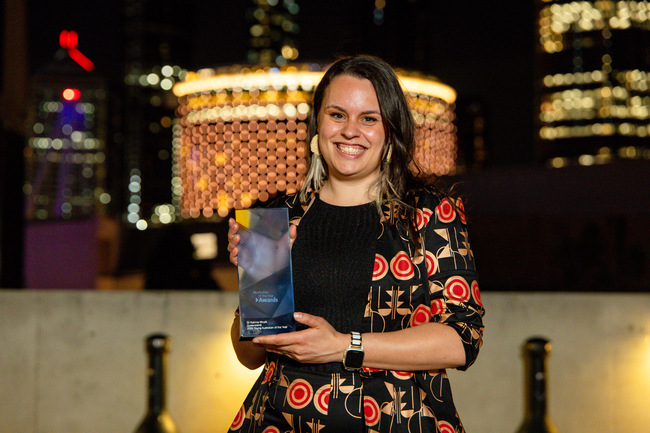
Shailer Park scientist Katrina Wruck has been named Queensland’s young Australian of the year.
The Indigenous chemist, who recently established a game-changing laundry product set to save consumers and the environment, donates her time to encourage youth in remote communities.
Many students Dr Wruck helps have said she was the first Indigenous scientist they had met.
“To me, it says that we need more of me,” she told MyCity Logan when she was nominated.
“I try to encourage, inspire, and be a role model for these students who might have doubts about what they can achieve.
“My message to them is that you can do it, it is possible, you can do anything.”
Dr Wruck’s new company is set to deliver the first “truly sustainable” laundry product, which involves fewer chemicals and features a reusable water softener to prevent pollution and save consumers money.
She said becoming an Australian of the Year felt “wild”.
“I am just in my lab doing my thing, going to conferences, sitting on boards, advocating for First Nations people, advocating for STEM, for education and flying around to First Nations communities talking to young people and sharing my story,” she said at the 2025 Queensland Australian of the Year Awards ceremony.
The 30-year-old said it had not been an easy journey, with many people not believing in her abilities.
“I would like to thank those people who said I couldn’t do it, because you were a really big driving force in me doing it,” Dr Wruck said.
“Keep telling me I can’t do it, because I am just going to prove you wrong – you just add fuel to the fire and inspire me.”
When Dr Wruck was in primary school, teachers told her parents she would “never learn to read”.
In high school, when she wanted to take the harder maths class, the school refused “for no reason other than they didn’t think I could do it.”
“If someone tells me I can’t do it, I will do it anyway, and it makes me want to do it more,” she said.
Ms Wruck has now completed three degrees, including a PhD that focused on breaking down dangerous ‘forever chemicals’ into benign ones.