


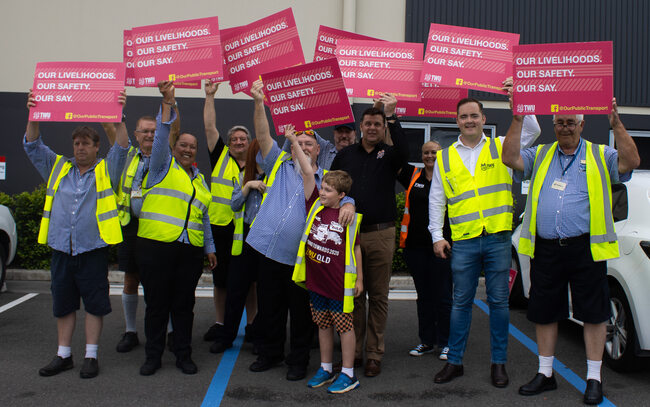
More than nine weeks of strike action and free fares for passengers has come to an end after the state government agreed to increase funding for local bus drivers.
For months Logan’s union-affiliated bus drivers have called for higher wages and better conditions, and for the past nine weeks they have refused to collect fares from passengers.
Although the state government does not directly employ bus drivers, on Friday (22 December) it agreed to a $155 million funding package that will see drivers’ wages increase to $35 an hour over a two year period.
The package will realign the wage rates across Translink-contracted delivery partners, which in Logan City is Clarks.
It is hoped this increase will also alleviate the pressures caused by the current driver shortage, by enhancing staff rentention and recruitment.
The Transport Workers Union Queensland’s director of oganising, Josh Millro said the funding package was “excellent news”.
“… not only for the bus drivers delivering the service, but also for the users of public transport who have felt the impacts of driver shortages,” he said.
“Our members have been fighting to have their voices heard and we are extremely proud that the Miles Government has listened and is now putting solutions into action.
“This is a much-needed pay boost that will be welcomed by bus drivers and will improve the sustainability of the public transport network into the future.”
The newly-appointed transport minister, Bart Mellish, said bus drivers were essential frontline workers.
“Higher bus driver wages can help attract skilled professionals to the industry and retain the excellent drivers we already have, resulting in improved service quality, ultimately benefitting residents and businesses,” he said.
“Bus drivers are essential frontline workers who provide crucial public transport services and they helped keep public transport running through the peak of the COVID-19 pandemic.
“By improving their wages, the government is acknowledging the importance of bus drivers and shows a commitment to supporting the role these services play in connecting communities.”