


Logan is facing a long hot summer, with the Bureau of Meteorology last week declaring an El Niño.
But unlike the Black Summer bushfires that ravaged the country almost four years ago, experts say the fire season ahead will be mostly grassfires.
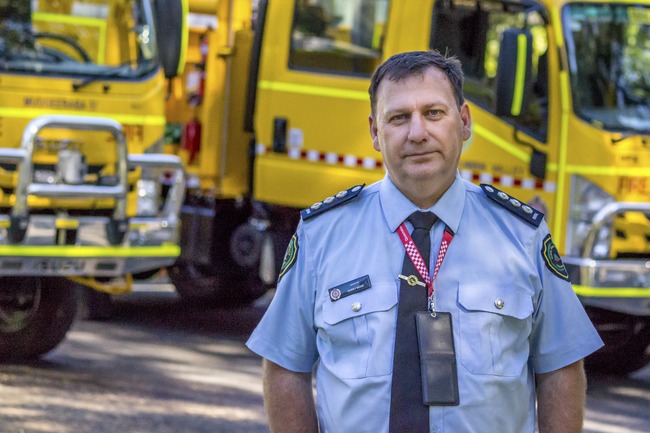
The Rural Fire Service’s south coast area director, Corey Bock, said this would mean less intense fires – especially for Logan residents.
“We get that really big season about every 10 years, but each year – from August to about November – we get extra activity,” Mr Bock said.
“This year we’ve got quite a considerable grassfire season, which are usually less intense than bush fires, although they move a bit faster.”
He said this should provide relief to at-risk homeowners, as long as they remained vigilant and prepared.
“Generally speaking, bushfires move through dense bushland and come out into a dense residential area, and it comes out with some intensity, so we often see houses catching on fire,” he said.
“Whereas a grassfire moves fairly quickly and you can often take refuge in your house and it will burn past you.
“If you haven’t done preparation around your home, then obviously it will catch, but for a prepared home you can often leave the house once the fire moves past, go grab the garden hose and just dampen down around the edges.”
Mr Bock said Logan residents living in rural and semi-rural areas could thank heavy rainfall for what might be a less intense fire season.
“The good thing is that over the last couple of years we’ve had a lot of rainfall right across southern Queensland, so that has put a lot of moisture back into the soil,” he said.
“We measure the depth of moisture in the soil using what’s called the Keetch-Byram Index to measure fire risk. Using that index, we’ve still got reasonable moisture in the forest which was protected from the weather.
“But out in the grassland areas it’s a little bit drier because it’s exposed to the sun each day, and the frost has killed off all the grass.”
He said areas in Logan were already reaching high fire-risk days, so it was important for residents to start preparing.
“We’ve got hots days, low humidities and a bit of wind coming through – those are the three key elements – so the best way residents can protect themselves is to do good housekeeping around the home,” Mr Bock said.
“Make sure we have short mown grass – less than 100 millimetres tall – and make sure there are no piles of rubbish leaning up against any walls.
“If the fire does come close to the house, it picks up little embers and wherever those embers land, they will start a fire if there’s anything combustible there.”
He said large-property owners could mow three-to-five metre breaks onto their grassland, essentially dividing their property into separate parcels, to help contain a fire.
Areas like Woodridge that are completely surrounded by urban infrastructure would be “pretty safe” in a grassfire, Mr Brock said.
“But if you’re heading over to Daisy Hill, for example, where it’s urban but on the fringe of those big, open grassland paddocks and forests, then obviously you have a different risk.
“The risky area is wherever there is an interface between suburbia or residential and bushland.
“So, people need to be thinking about what happens if some burning embers float from the fire 100 or 200 metres away and land on your property.”
To help get prepared, Mr Brock recommended locals visit the QFES website to help devise a bushfire preparedness plan.
“Don’t wait until the fire starts. – you need to think about it.”
Mr Bock looks after the rural fire brigades across Logan, Gold Coast and the Scenic Rim.
He joined QFES in 1990 and has been a senior officer for the past 11 years.