


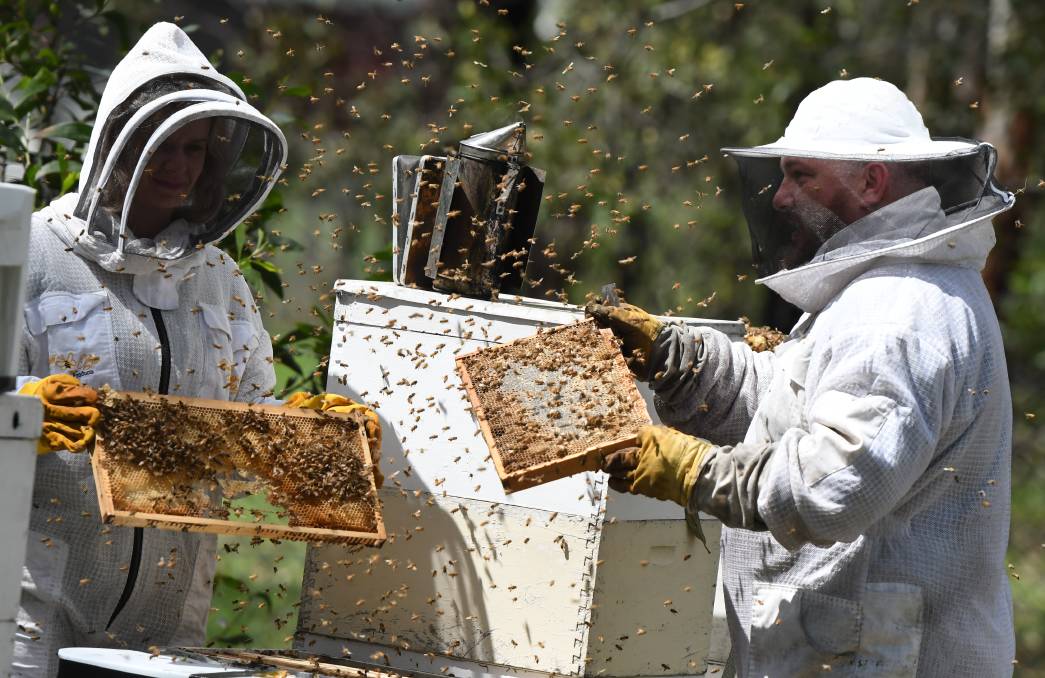
For the past year local beekeepers have been on the lookout for a deadly bee parasite, the Varroa mite, as the species edges closer to the Queensland border.
But now the national effort to eliminate the parasite has been called off, with experts branding their eradication as “futile”.
The focus is now on mitigation and management.
Varroa mite, also known as Varroa destructor, is a parasite that latches onto honeybees and their brood, transmitting viruses and weakening their immune systems.
In April this year the Queensland government set a goal of 15,000 beehive checks to ensure the state remained free of varroa mite.
Local beekeeper and owner of Bee All Natural, Jason Roebig, said although authorities had given up, it was important for local beekeepers to continue testing their hives.
“Technically there’s been no documented or reported events in Queensland as yet,” Mr Roebig said.
“However, it’s not a matter of if it happens, but when it happens, so we need people to be on the front foot so we can at least try and work out a plan of attack.
“I’ve been checking mine periodically every two weeks.
“We do a combination of sugar shakes, alcohol washes and drone brood.”
Mr Roebig said it would only take one or two varroa mites inside a hive for them to become endemic to a surrounding area.
“Bees aren’t social as far as they’ll go and visit the hive next door, but if bees land on a flower together, a mite can jump from one bee to the other,” he said.
“Then they go back to their hive and then that mite will start laying inside the hive.
“So, there’s no getting around it now – beekeepers can be as responsible as they want to be, but unfortunately with the transient nature of pollination, it can’t be stopped, and we need pollination for our food security.
“Bees will travel around five kilometres to collect pollen and nectar so diseases can travel quickly.”
A small hive beetle, for example, could “wipe out a hive in four days”.
“It’s an insect that lays its eggs inside a hive and when the hive is strong, the bees will actually keep it clean and they’ll remove those eggs or they’ll keep a small hive beetle at bay so they can’t lay their eggs,” Mr Roebig said.
“But if the eggs do hatch, they basically hatch into maggots and they start eating all the honey and nectar.
“And as they’re doing that they start fermenting, and then the hive can slime out in four or five days.”
He said countries around the world had been dealing with Varroa mite infestations for years, so as long as beekeepers remained vigilant and diligent with testing their hives, it should be manageable.