


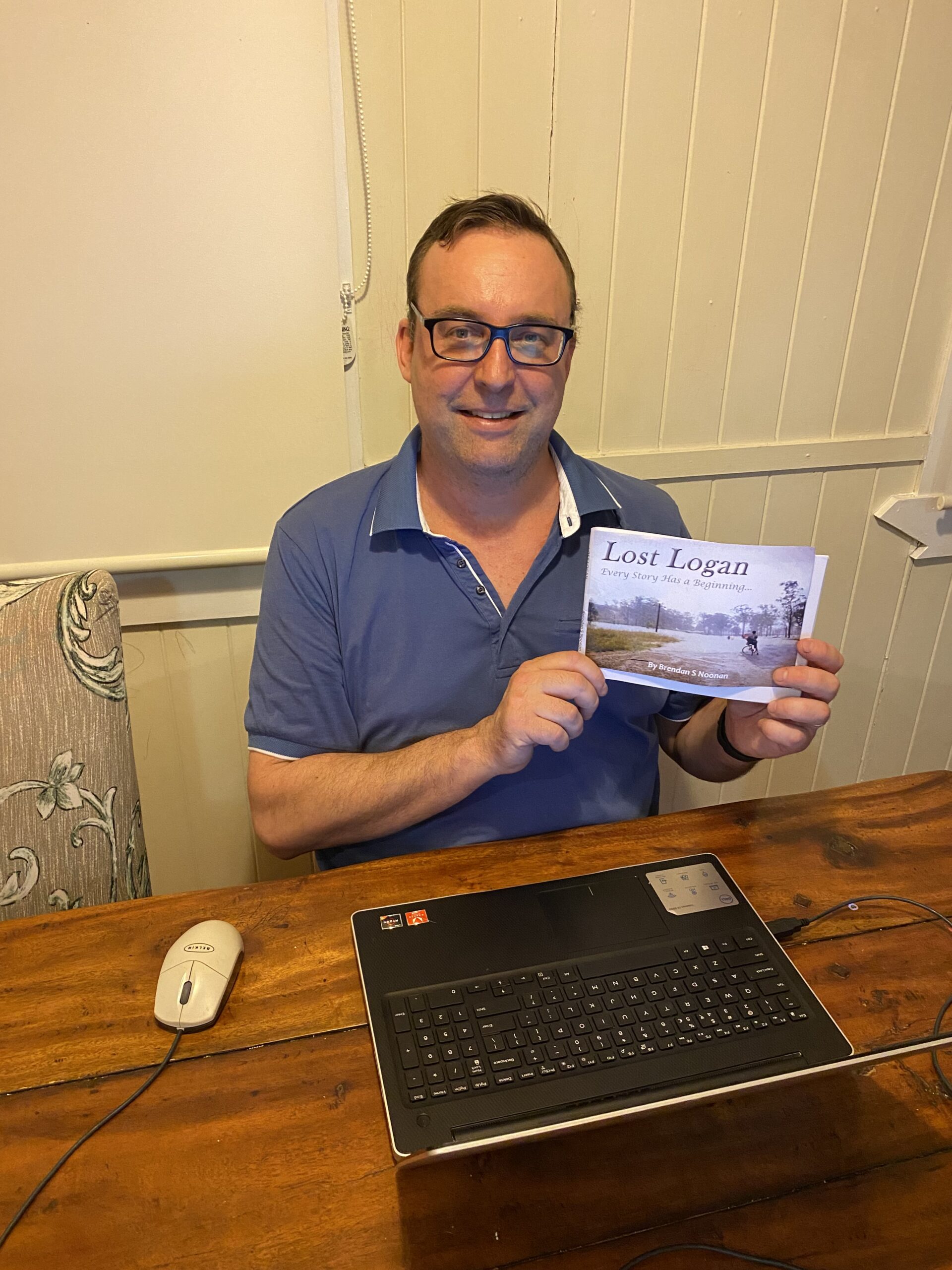
The City of Logan’s very own history guru has written a book detailing the fun, sad and nostalgic facts and events of Logan’s past.
Born and bred Logan local Brendan Noonan wrote and published the detailed history of Logan, called Lost Logan, after years of avid interest in the city’s background.
It recounts the city’s history in chronological order – starting in the 1880s and including a range of images and insights from locals.
He’s been running a Facebook page of the same name since 2014, and it has amassed more than 20,000 followers.
He said he created the page to share Logan history with the community.
“I grew up in Logan so interest stemmed from there and I noticed that while you can go to the library for historical information, it wasn’t as accessible to a wider audience,” Mr Noonan said.
“The page was never meant to be an academic endeavour; it was just me trying to get the word out about Logan.”
He said he had learned incredible facts about Logan, including stories of a former lion safari and the water park replaced by the Hyperdome.
“There’s also the stories about the crocodile that was caught in the Logan River,” he said.
“Initially I had to go digging for this information, particularly for photos.
“But now, because of how the Facebook page is growing, I’m at an exciting stage where I get pictures from the community.”
Mr Noonan said there were thousands of people visiting the page every week.
He said people love reflecting on what the city used to look like, as well as the memories and feelings the photos evoke.
“At school we’re taught about national and state history – even Brisbane history – but we don’t get as much exposure to Logan history,” he said.
“So, I started writing the book in 2019 and I just finished it.”
He said it was one of “the most exciting things” he’d ever done.
“While the book holds up academically – it’s historically factual – it also has a really fun aspect to it,” Mr Noonan said.
He said the book was divided into two parts: on the left-hand page is the history – the picture and the facts – and on the adjacent page is a compilation of “the best comments” from the Facebook page that relate to the topic.
“It’s comments from people who were there, or who had ancestors that were there, or who have some type of nostalgic memory of the topic.”
“Half the book is the historical narrative from my perspective, and the other half is community input.
“There’s so much knowledge in the community.”