


These days we’re talking a lot about the evolution of computers and the way they’re transforming our lives – the way we drive, cook, watch television.
If the so-called early adopters could be believed, nobody reads the TV guide in the paper anymore.
They click a button on the damn screen to see what’s on in the moment, and if they don’t like it they go to one of their streaming services to find something that satisfies the mojo of the minute.
As for me, I like to plan my day. And I’m not sure if you’ve tried to look at the on-screen television guide a day in advance, but it all becomes a little confusing.
Pass me the inky version any day.
Computers do of course have their conveniences. I have one in my car that winds up my windows, detects if it’s raining so it can wipe my windscreen, adjusts my seat and tells me when the car needs to be serviced.
Technology will continue to move forward, and it’s a great talking point to dream about how far things will go.
Someone asked me at a dinner table conversation the other night whether I thought artificial intelligence would be able to create minds sharper than the human brain.
“They already have,” I said. “It’s called a calculator.”
What a funny old fool is Wayne, they gaggle, as they launched into a sci-fi conversation of sorts about how robots would one day be telling us all what to do, how to do it.
Why bother, I thought. Surely they’d be smart enough to be doing it themselves.
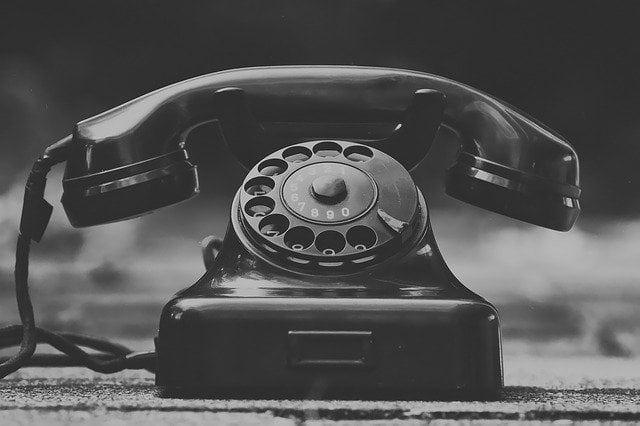
I’m not working any more, but when I was, the innovation of the day was the telephone.
I remember when we moved to facsimile machines.
I was one of the lucky ones in the office to be equipped with a mobile phone. Darn thing weighed about 3kg, including a massive battery that for some reason always had to be lugged with the phone attached.
They called it mobile. A bit like calling a suitcase a mobile cupboard.
Somebody then worked out that the phone wasn’t the answer after all. Instead, we’d be wearing pagers on our belts that told us to ring the person who’d rung the operator who’d typed the message that eventually showed up on our waist.
I must say though that the touch phones of the 80s were a revolution. No longer did we have to wait for the dial to return to its initial position before we could add a number.
Granted, phone numbers were shorter back then, but it was nice to punch in a full number within seconds.
We’d then wait. And at times, wait. And wait.
The flip phones of the 90s gave us all a sense of empowerment as we paid through the nose for every text we sent to our friends, and every phone call.
There were no plans, which was the reason the Blackberry became so popular in the early 2000s. We could send longer messages – entire letter-length notes if we wanted, all with the press of a single button after we’d finished typing with those teeny-tiny little keys.
It’s hard to believe, but the iPhone wasn’t born until 2007.
Now, we use phones to research. In fact, I wouldn’t have known the iPhone was born when it was, had it not been for my iPhone.
We use them to watch television, turn the lights on in our house, do our banking, send messages, emails. Oh, and we occasionally make phone calls too, which are less necessary because of all the texting we do.
So our phones are pivotal to the way we function.
What would we do without them, we ask.
You see, the big telcos have been on this journey.
My phone tells me Optus has been around since 1991 in Australia, partly the reason why they’ve been able to build all those towers we now figure might not be all that good for our health.
I tried to Google all about that last week. But the darn device blacked out. A conspiracy, I say.
Hey Wanda, do you think you might be able to give Optus a call? Hang on, you might want to use the dial phone. I’ll get it from the cupboard in the garage.