


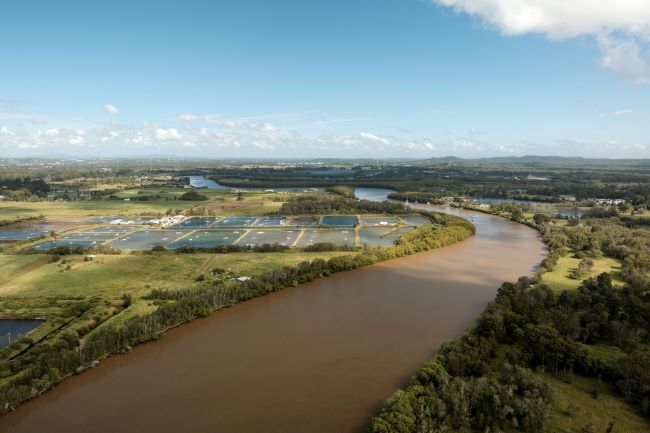
Almost 30,000 Logan properties could be removed from or face reduced regulation under the city’s flood overlay mapping, after councillors backed the biggest rethink yet of how flood risk is shown and used in planning decisions.
The changes will strip Logan’s rarest flood scenarios from ordinary planning maps, create a lower-regulation category for shallow creek and gully flooding and change the first map residents see when they search their property on council’s Flood Portal.
But the Special Council meeting on Thursday, 4 June was not a clean sweep for frustrated landowners.
Councillors kept key safety triggers for house extensions and shelter-in-place rules after debate over legal risk, emergency access and the danger of putting more people in flood-prone areas, while council papers showed the full Logan Plan is now proposed to begin in 2030.
Council officers told the meeting more than 4000 submissions were still being worked through, with more than 90% understood to relate to flooding.
Logan Mayor Jon Raven said residents had made it clear they wanted change.
“We heard loud and clear that the community wanted change and councillors and I have made important decisions today to bring about improvements to the flood mapping for our city,” Cr Raven said.
“This work is about getting the balance right, improving Logan’s flood mapping so residents have clear and practical information while keeping strong protections in place to safeguard life and property.”
The biggest change is the removal of flood events less likely than a 1% annual chance event from flood maps, including the Probable Maximum Flood, while a new development code would still manage rare flood risk for essential community infrastructure and vulnerable uses such as hospitals and childcare centres.
The council also backed a new Flood Planning Area 4 category for shallow, slow-moving floodwater in dry creeks and gullies, reducing regulation while still requiring building floor levels and floodplain function to be considered.
The Flood Portal will also change, with the first map residents see to show floods up to the 1% annual chance event, while larger floods up to a one-in-2000 annual chance event would remain available through other map tabs and PMF mapping would be removed.
Cr Raven said a new Temporary Local Planning Instrument, (TLPI) would be used to bring the changes forward sooner.
“A TLPI is the fastest and most effective way to bring about the urgent changes that the people of Logan have been calling for,” he said.
“The work is not over. We’ll continue to work closely with the State Government to bring about change for Logan and communities across Queensland.”
Insurance was also raised, with Cr Lisa Bradley asking whether the changes would affect residents’ premiums.
In response to a question directed to the city solicitor, the meeting was told the council’s information was that premiums were not set by council flood maps.
“The information that council has is that insurance premiums aren’t set based on council’s flood mapping,” the meeting was told.
“What insurers use is a national database that isn’t publicly available.”
Council officers later said the maps were not the defining factor for insurance premiums.
“There’s a whole range of information that an insurance company draws on, not often our maps,” an officer said.
“Therefore it’s a matter for them to decide what they base a premium on, not us.”
Councillors debated whether larger house extensions should be allowed in flood-affected areas without triggering a flood assessment, with supporters saying they would help overcrowded and multigenerational households.
Opponents warned larger as-of-right extensions could put more people in the floodplain, shift risk onto neighbours and limit council’s ability to require safer design.
The council retained the current 25sqm threshold for small-scale house extensions outside Flood Planning Area 1, and kept the shelter-in-place approach requiring isolation to be less than 36 hours while backing clearer guidance for houses.
While the council has shifted significantly in response to the flood-map backlash, the changes are not immediate, do not remove all controls, and the proposed TLPI still needs to be drafted, brought back to council and submitted to the State Government for approval.
Subscribe to stay up-to-date with news from across Logan. You’ll receive a link to our digital newspaper direct to your inbox each week. It’s free.
Follow MyCity Logan on Facebook and Instagram