


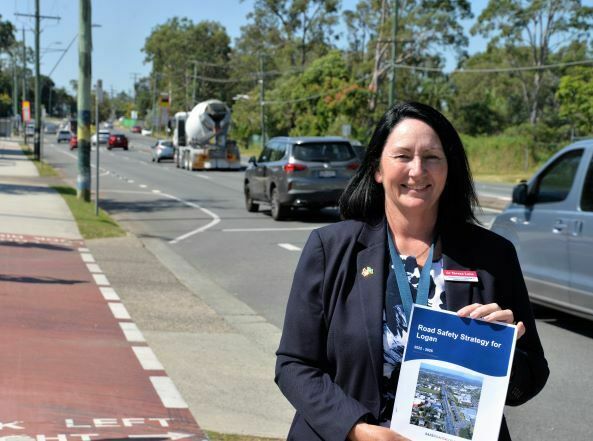
As emergency services chiefs call for calm on the roads over the Easter long weekend, Logan’s council is launching a strategy it believes will curb serious road accidents.
In the past 12 months, 15 people have lost their lives on Logan’s roads.
Since new year, four have died – all of them motorcyclists which has prompted special calls from police for cars and motorbikes to be respectful when sharing the roads.
Last year, council was criticised for allowing developers to set up temporary turning bays on dangerous roads without having to erect proper signage or create an extra turning lane for safety.
Calls for stronger action came after a motorcyclist was killed when it ran into the back of a turning car.
The latest document from council is a five-year plan – what council is calling a “long-term strategy”.
“(It) provides a blueprint for council, its road safety partners and the community to work towards preventing the 300 serious crashes that occur annually in the City of Logan,” a council statement said.
Cr Teresa Lane is the elected representative charged with overseeing infrastructure matters.
“Behind every statistic is a terrible tragedy and the truth is most crashes are preventable,” she said.
The current strategy, she said, would learn from a previous strategy, “using an evidence-based approach to identify areas of road safety that need improvement”.
The seven-point plan identifies seven key areas of concern:
• Education, encouragement and advocacy
• Crash investigation and prevention
• Pedestrian enabling facilities
• On and off-road cycle facilities
• Speed management measures
• Focus on engineering treatments
• Monitoring and reporting
“But we can’t do it alone, we need your help,” Cr Lane said.
“Four major factors keep popping up in Logan crash statistics – drink driving, inexperienced young drivers, motorcyclists and not driving to the conditions.
“The strategy will explore opportunities to educate vulnerable road-user groups such as young men, motorcyclists and pedestrians and adopt road design and speed management strategies to reduce the incidence of serious crashes.”