


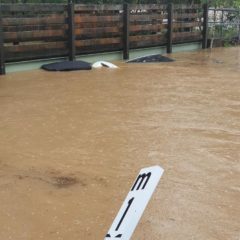
INSURANCE claims during autumn (March to May) show Logan has had a tough few months.
With real estate prices and rents continuing to rise faster in Logan than any other region in Southeast Queensland, floods and wild weather led to 9.5% of all claims in the state coming from the Logan-Beaudesert region.
Each quarter, a number of insurance agencies track claims, looking for areas which are considered most vulnerable.
With tradies in short supply, Flagstone resident Sammy Rindle’s is still waiting for her home to be repaired after it was damaged in May’s severe weather.
“Part of the living room ceiling collapsed from the amount of water we had come through in the first weather downpour and then everything got even more damaged in the second weather event,” she said.
“We also noticed the ground around our new inground pool was sinking, the pool nearly popped out of the ground and the front patio started cracking and moving away from the house.
“There was so much water coming down at the time and now we also have mould growing inside the walls.
“We are still waiting for our roof to be settled and fixed, we have had to cover things over with tarps and sheeting for the moment.”
The insurance company’s “Wild Weather Tracker” also conducted a survey which indicated 54% of people are worried about their property being damaged in the next 12 months and 40% do not feel prepared if severe weather does hit their suburb.
Mrs Rindle said she was concerned about the possibility of more severe weather coming this year.
“With the risk of another La Nina event happening this year, I am concerned that we will no longer have a house. We still have massive holes in the roof and in our walls, not to mention our power bill is through the roof this winter as we can’t keep the house warm,” she said.
“If the insurance companies can’t cope with all these events, what are we supposed to do?”
Logan mayor Darren Power has urged people to take advantage of state and federal government funding which offers to repair houses to a state they are resilient to flooding.
There is also an opportunity for people in flood-prone areas to consider selling their properties, packing up, and starting again on higher ground.
In January, the federal government launched a Disaster Ready Fund which has an annual $200 million commitment for disaster prevention and resilience initiatives.
NRMA Insurance general manager Luke Gallagher said that with climate change expected to make storm and flood events worse, a greater focus on disaster mitigation measures is needed to help protect people, communities and businesses.
“The impacts of a changing climate means that wild weather will continue to be a fact of life. As individuals, we are not powerless. Every household can play a role in understanding how they can be better prepared for severe weather,” he said.
“This includes having an emergency plan and kit ready, but also making changes to ensure your home is safer, particularly those who live in storm or flood prone areas. Regularly cleaning gutters to stop water building up, clearing overhanging branches and other simple home maintenance actions can also reduce damage during wild weather.”