


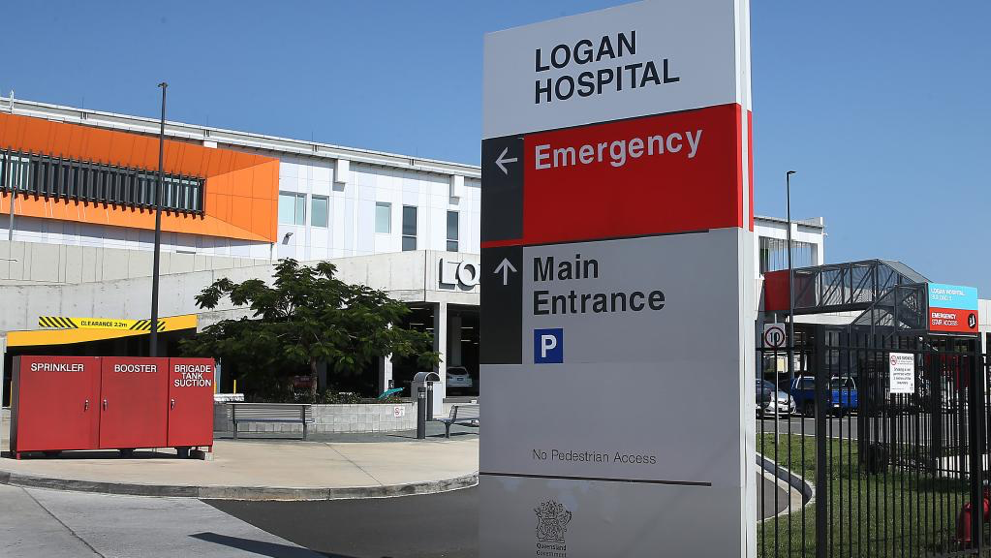
A former nurse has raised concerns over the distribution of opioids at Logan Hospital, claiming the facility has been handing out Endone without following legal protocols.
Sharon, who requested her full name not be used, said she witnessed the improper dispensing of the Schedule 8 drug while being treated for a serious foot injury in August last year.
She described her experience in the emergency department as an “eye-opener” and expressed concerns about the handling of pain relief medication.
Upon arrival at the hospital via ambulance, Sharon had her blood pressure taken and was asked what had happened.
She was then moved to the emergency reception area, where she remained overnight from 7pm until approximately 9.30am the following day.
During her time in the waiting area, Sharon observed what she described as a concerning pattern of medication distribution.
“I noticed that some people, who from my assessment as a nurse did not appear to have severe injuries, were being handed small medicine cups,” she said.
“At first, I assumed it was standard pain relief like Panadol and Nurofen, but later a nurse handed me a cup and said it contained Endone and Panadol.”
Sharon stated that the endone was provided without the required legal checks.
“By law, when handing out a Schedule 8 drug like Endone, a nurse must ask for the patient’s full name, date of birth, address, and whether they have had the medication before,” she said.
“The medication must also be administered by two nurses, either two registered nurses or a registered nurse and an enrolled nurse. None of this happened in my case.”
She added that she was not asked if she had taken any medication before arriving at the hospital or if she was on any other prescriptions.
“The nurse just handed me the cup and walked away,” she said.
“That is a clear breach of policy and law.”
Endone is typically used for post-surgical pain relief and is not recommended for general pain management.
Sharon said that, in her professional experience, such medication would not be administered in this manner in a private hospital setting.
“If I had done that at my hospital, I would have been terminated immediately,” she said.
Sharon reported her concerns to the hospital via email and later received a phone call stating that the Nurse Unit Manager from the emergency department would follow up.
However, she claims the response did not address the core issue.
“I was told that I had been triaged, but that simply meant someone took my blood pressure and asked what happened,” she said.
“I was not given any explanation about what the process would be, nor was I assessed for pain levels.”
Sharon has since undergone surgery at a private hospital, where she said proper procedures were followed.
“The contrast between public and private hospital care has been shocking,” she said.
“In the private system, rules are strictly adhered to. In the public system, it appears they have either become lax or overwhelmed.”
She remains concerned about the broader implications of her experience, particularly given the ongoing opioid crisis.
“We have an opioid problem, and yet, from what I saw, people were walking into the hospital and being handed endone without proper checks,” she said.
“That is extremely concerning.”
Sharon has spoken with fellow nurses about her experience, with many expressing shock.
“My colleagues and even those who have worked with the Australian Army were stunned,” she said.
“In every other setting, these protocols are strictly followed.”
Metro South Health has not provided an official response at the time of publication.
MyCity Logan has also reached out to Queensland Health for comment.