


Mater Hospital Brisbane has introduced a new program to help those with Functional Neurological Disorder (FND) to retrain their brains, and patients say it’s working.
FND affects the nervous system and the brain, causing the brain to incorrectly receive signals, which results in a variety of neurological symptoms, including blackouts or drop attacks, paralysis or limb weakness, uncontrollable shaking, and even the feeling of a missing limb.
Mater’s FND Group Treatment Program aims to empower outpatients and help them identify their triggers, as well as removing the stigma surrounding the disorder.
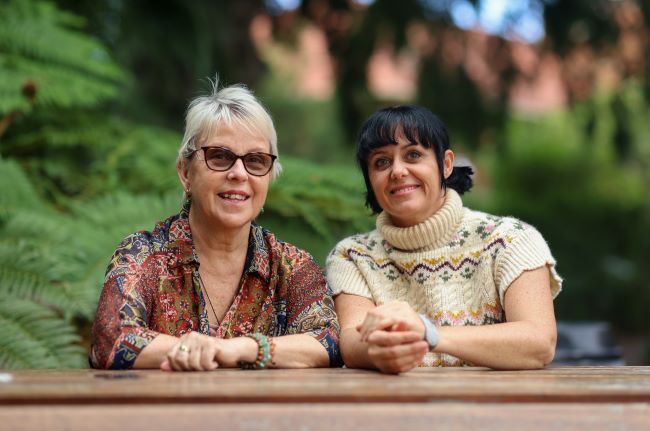
Slacks Creek resident, Misty Feeney, suffers from FND and said the program gave her hope.
“It gives me validity and a backing knowing there is something wrong with me,” Ms Feeney said.
“It’s not an easy path but there is hope just knowing the more neuropathways we form and regulation techniques we use, the better our symptoms will be for it, ideally reducing episodes or flare ups.”
Ms Feeney said she suffered trauma in her childhood.
“I have been through a lot in my lifetime,” she said.
“I have been held up at knife point, had death threats at work, and suffered miscarriages.
“Knowing others were going through something similar really helped as well as opening up about what I was going through.”
Mater neurologist Daniel Schweitzer said there was an ongoing stigma regarding FND in the healthcare system.
“There may be a reluctance among healthcare practitioners to manage patients with FND because the cause of the problem is not due to a structural (or organic cause),” Dr Schweitzer said.
“But is rather caused by a range of other factors, including but not always psychological factors that are not well understood in clinical practice.”
He said FND was one of the most common conditions he encountered, diagnosing around 10 new patients a month.
“The prevalence of FND in the Australian community is unknown,” Dr Schweitzer said.
“We do not have a national database which means that the estimated prevalence most likely under-estimates the true prevalence of FND in the community.”
According to Mater psychosocial occupational therapist, Mary Matthews, the disorder mimics symptoms of other diseases, often resulting in misdiagnoses.
“To treat the condition, neurologists complete an initial assessment which may include a diagnosis using the Hoover’s Sign and the tremor entrainment test, and then refer onto occupational therapists, physiotherapist and/or psychologists,” Ms Matthews said.
“This assists with helping the patient to identify their triggers and retrain their brain by unlearning abnormal and dysfunctional movement patterns and relearning normal movement.”
Mater’s FND program was designed to prevent the “ever-growing” condition from putting strain on the healthcare system.
“There’s not enough help in the public sector for these patients,” Ms Matthews said.
“The condition may not always be cured but it can be managed.”