


With current rent prices pushing low-medium income earners out of the market to buy their own house, attention has turned to an overhaul of current planning regulations.
The aim is to make it easier to develop affordable housing.
The Urban Development Institute of Australia, a peak body for the development industry, has released its vision for a better legal framework to achieve this.
Several of the major talking points from the proposal include making it easier to designate land for infill housing, making more mixed-use land, and on cutting some of the red tape that increases housing costs.
In Logan, this refers to application fees, offset fees, and the increasing number of stormwater detention and treatment demands.
UDIA’s Logan branch president Mark Clancy believes planning rules are hindering growth in the region and putting people out of homes.
“In Logan, our members are reporting that housing supply is currently constrained by planning and infrastructure limitations and by fragmentation of land ownership in designated growth areas,” he said.
One example of innovative social housing has been a specialist disability project at Marsden.
Developed by investLogan in partnership with Blue CHP and Compass Housing Services, the project was in response to statistics that showed a significant need for high-quality SDA housing for Logan people on NDIS plans.
“Marsden plays a big part in contributing to the broader investLogan strategy to drive investment in the region that benefits both the community and our shareholder,” chair Steve Greenwood said.
Logan deputy mayor Jon Raven said Logan was leading the way to deliver housing for people with all abilities.
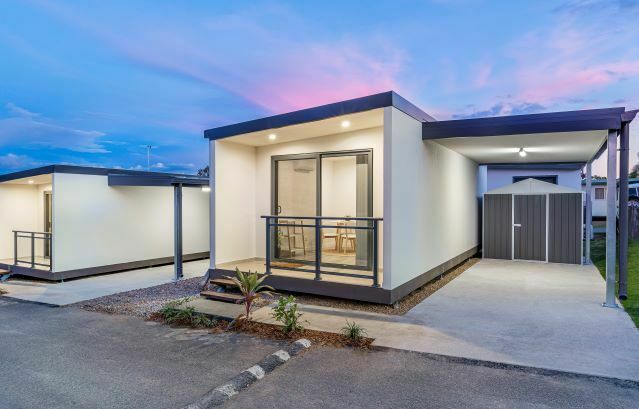
The two, three-bedroom dwellings have been designed and constructed to the High Physical Support SDA Design Category and feature a generous front and back yard space.
Constructed to this standard, the houses can be used as National Disability Insurance Scheme (NDIS) housing for up to six people and provide facilities for a Supported Independent Living (SIL) Provider to be present on site.
In years gone by, broad housing affordability has been addressed by building more social and community homes, but according to Mr Clancy, the industry now understands there needs to be strategies to improve the whole property market to improve affordability.
“The sector really understands how it is all connected,” Mr Clancy said. “If the private housing market works as well as possible then there are less people who need social housing.”
The UDIA has based its vision for reform on the following areas:
- Introducing a code that makes it easier to develop land with small infill homes
- Allowing a range of home types within existing urban areas, such as small homes, terraces and flats, which would appeal to people with all kinds of needs
- Halting policy changes that increase the cost of housing; for example, in Logan, examples of these are application fees, offset fees, and increased requirements around stormwater detention and treatment demands
- Better planning for the future, which sets housing land aside and keeps it free from environmental clauses and makes easier to start building homes
The Queensland government’s department for Communities, Housing and Digital Economy agrees that the key to overcoming housing issues has been misunderstood in the past.
“Social housing has historically been considered the only type of housing that could resolve housing needs,” a CHDE spokesperson said.
This is resulting in a greater focus being placed on integrating onsite support services with new community housing developments and setting aside accommodation for populations affected by issues like homelessness and domestic violence.
As of November 30, there were 5,082 social housing properties in the Logan area, compared to Ipswich which has just under 3,000.
By 2025, the state government will start constructing 178 new social homes. Logan will also be treated as its own catchment for housing initiatives.
Previously, the region was addressed as a combined Logan/Redlands catchment. It is hoped that by splitting the two cities, this will result in plans better suited for the needs of each community.