


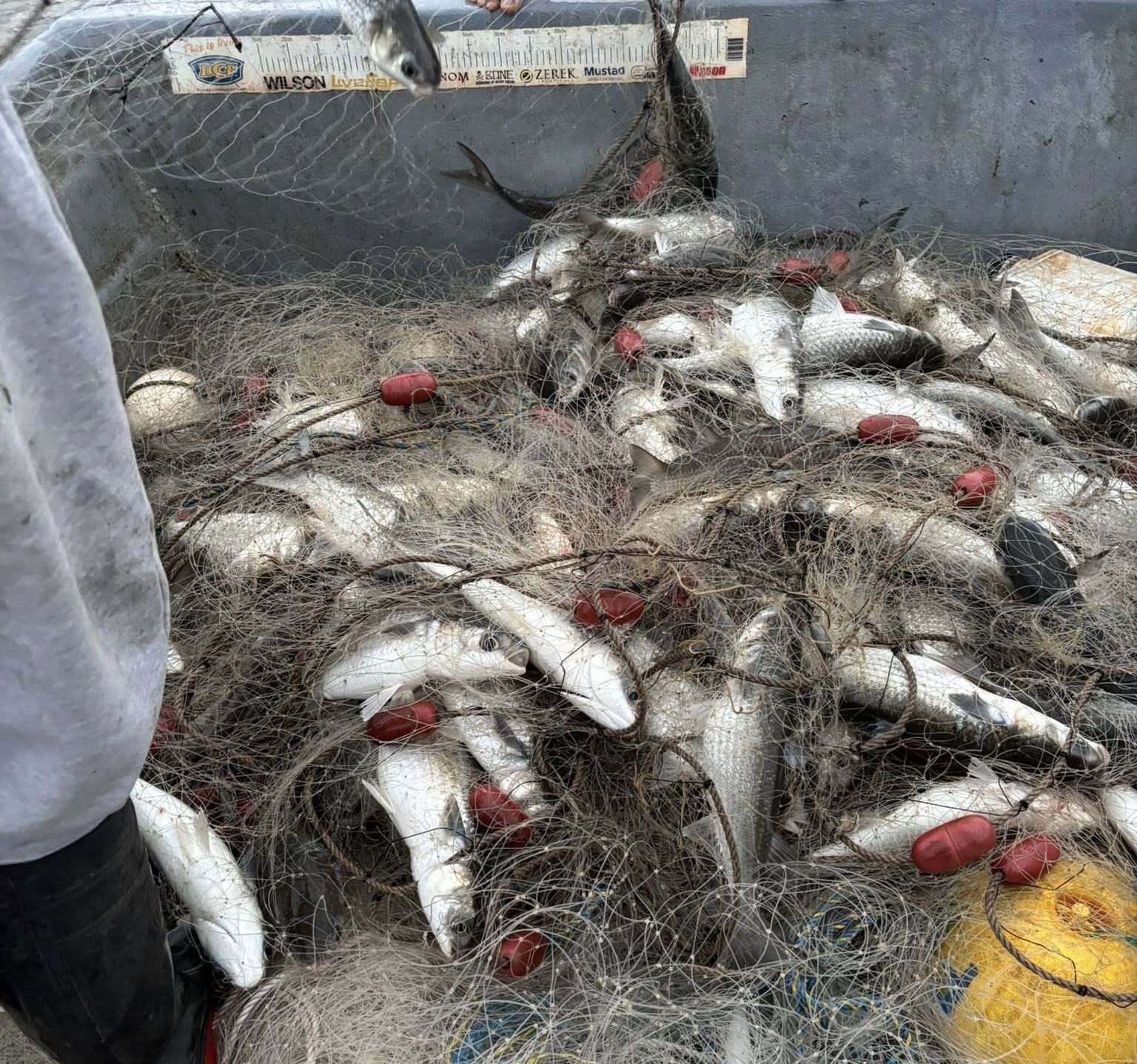
THE Department of Primary Industries is investigating complaints made by local anglers and politicians who are calling for a ban on gillnetting in the Logan and Albert Rivers.
Gillnetting is a legal fishing method that uses a vertical wall of mesh netting, suspended by floats and weights, to trap fish by their gills. The size of the mesh determines the catch, allowing smaller fish to escape while larger ones become caught or entangled.
Local fishermen argue the practice is outdated and unsustainable, indiscriminately targeting species like barramundi and king threadfin salmon in the rivers, which are critical nurseries for the species which weren’t always common to the area.
Gillnets have in the past proved to be deadly to other untargeted species that call the Logan and Albert home, with Queensland Boating and Fisheries Patrol finding turtles, birds, water dragons and more caught in nets.
However, the practice helps source the livelihoods of commercial fishers across the state, who have called for alternative fishing methods before any bans take place.
While gillnetting is not new to the Albert and Logan rivers, recreational fisherman say they have noticed a sharp increase in the amount of commercial netting and a drop in fish numbers.
One Ipswich-based business, Gold Star Supermarkets, has this year regularly posted photos and videos of its Logan River netting catches onto social media – much to the chagrin of locals, who have expressed concern over impacts to local recreational anglers, business and tourism.
Gold Star Supermarkets, which has not been accused of doing anything illegal, refused MyCity Logan’s requests for comment.
Steve Morgan, a veteran angler and Australian Fishing Trade Association board member with a background in marine science, said his live sonar would last year detect about 100 barramundi during one outing in the Logan River.
“ This year, I reckon I’m seeing five in a session,” he said.
“I think [commercial fishers] have caught a significant amount of the barramundi in that river, and a lot of the threadfin in there as well.”
Other recreational fishermen have reported a barramundi reduction of more than 80%.
A spokesperson for the Department of Primary Industries (DPI) said they were aware of increasing calls to remove gillnetting in rivers and creeks in south-east Queensland, and longstanding conflicts between commercial and recreational fishers in relation to the use of gillnets in other parts of the state.
They said DPI was investigating complaints about local gillnetting to ensure operations were sustainable and compliant with fisheries regulations.
“[Gillnets] are an effective method of harvesting specific sizes of fish which are regulated by the DPI,” the spokesperson said.
“Key target species such as barramundi and king threadfin in this region have total allowable commercial catch quotas, and commercial fishers are required to report upon landing. When these quotas are reached, the species is made no-take.
“These quotas allow DPI to manage the commercial harvest and to reduce impacts on recreational fishing experiences.”
In the past, barramundi were less common this far south, preferring the warmer waters of the tropics.
But Mr Morgan said a combination of factors – including warmer waters due to climate change, local farming and flooding – have brought them south.
“ For the last 30 years, up until about a year and a half ago, they weren’t even allowed to gillnet or commercially fish for barramundi in the south-east. Now that barramundi have started appearing in the south-east… somehow we’ve been allocated this quota of barramundi we can take out a year.
“But that [quota] might be all there is, so it is a bit of a mistake that happened under the last government that I’m sure they’ll rectify.”
This year, the threadfin quota for the local region (about 12 tonne) has already been reached, meaning commercial fishers cannot take anymore until next year. The barramundi quota (18 tonne) is more than 50% away from its 2025 limit.
Member for Macalister Mellisa McMahon this month launched a petition calling on the Queensland government to ban gillnetting in the Logan and Albert rivers. It received about 2000 signatures in two weeks.
Gillnetting is currently being phased out in northern Queensland, and will be banned from 2027. Commercial fishers there say they “urgently” need an alternative to replace the fishing method used for generations.
Ms McMahon said in her MyCity Logan column last week that sustainable fishing practices would protect breeding fish and “dramatically reduce” bycatch.
“Gillnet reforms should be part of a broader transition to more sustainable fishing practices that address a number of risks to our local environment,” she said.
“Our local rivers cater for recreational anglers, tourism operators and small businesses alike, all of whom rely on healthy fish stocks.”
melissafmcmahon.com.au/projects.
Image: Gold Star Supermarkets Facebook





Stop the netting
It sickens me that we allow this to happen to our back yard. It will take years to recover we need to put a stop to gill netting
Why is this allowed when we protect the mangroves but not the fish and marine life that live in them?