


I’ve been reviewing restaurants for a number of years, and I’ve rated some of the best for respected food publications and guides.
One thing I’ve learned during that time is that it’s not always the bougie, neatly-decored, small-meal-on-a-huge plate joints that serve up the best food.
Sure, there are some excellent ones that cost a lot of money. But therein lies the point – you don’t have to pay top dollar to get quality food.
Here’s a tip. And this goes for most cuisines. If you’re looking for a great restaurant of any ethnicity, take a few moments to close your eyes and listen to the language being spoken.
Okay, I get it. You don’t speak 27 languages, but you don’t have to. If they’re all speaking the same language with the same tones and inflections, there’s a high chance you’re onto a good thing.
Then, scan the walls. If there is advertising in a foreign language, you’ve ticked another box. If there are magazines or newspapers of a foreign language on the shelves, tick another box.
Finally, if the menu is written in a foreign language, you’re half way to authentic town. Okay, so you haven’t yet guaranteed great food, but you’ve negated the risk.
People are fussy about their native cuisine. If it’s not right, they won’t return to a restaurant that serves it. Whether it be meat pies, Singapore noodles or Hungarian goulash, the same rule applies.
At Mama Korean Cuisine at Underwood, tucked in the back of the Asian markets next to Underwood Marketplace, all patrons were sitting in basic stools, on simple tables, with their children, and all speaking Korean.
Only 22 dishes cover the entire menu, the most expensive of them $18.
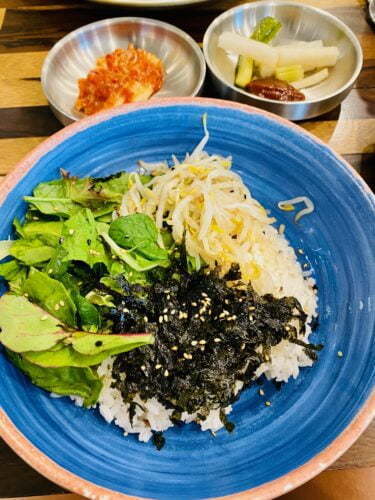
Spicy seafood soup comes with kimchi, and a mix of Asian vegetables including seaweed, with a smother of sesame oil and side sauces. Mix the two and it’s a delightful fusion of flavours.
A fried cutlet comes with cheese, schnitzel-like, but smothered in a sweet Korean sauce. There are ricecake noodles, Korean-style soups, noodles, dumplings and stir-fried beef which the Koreans know as bulgogi.
Authentic doesn’t always mean it’s to everyone’s palate, but in this instance there is a band of flavours to meet anybody’s needs – spicy, sweet, fresh, deep-fried.
As a rule, Korean food – perhaps aside from the pork cutlet (donkatsu) – is extremely healthy, and portions are great without being overwhelming.
As far as holes in the wall go, this one’s a gem. Not a fine dining scene by any stretch, but food that takes you on a pleasant journey to the most southern coast of Korea.
Service is friendly and accommodating. Be warned, it’s walk-in and quite popular, so there might be a wait if you’ve been unlucky with your timing. It closes at 9pm.