


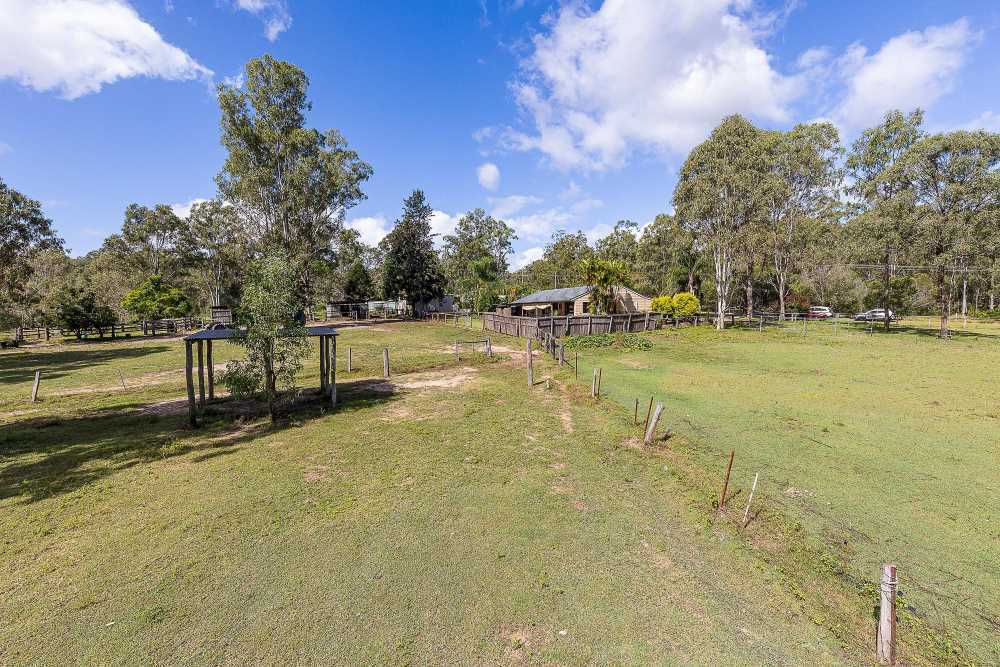
The cure to a lethal plant disease affecting more than 400 types of Australian flora may have been found in a backyard in Jimboomba.
Local council, the state government and the University of Queensland are working with a Jimboomba land owner to determine whether a native guava tree found on a local property is resistent to myrtle rust, a fast-spreading fungal disease.
Myrtle rust was first detected in Australia in 2010, and now affects over 400 types of plants, making them incapable of producing seeds, fruit or new growth.
The fungus produces brown-to-grey lesions on leaves, which are often surrounded by yellow spores.
It spreads by spores on the wind, and vehicles, clothing and machinery, according to the Department of Agriculture, Fisheries and Forestry.
It has been found on species like eucalyptus, lilly pilly, tea trees, bottle brushes and other types of the Myrtaceae
family.
For example, a once-common native guava is now listed as ‘Critically Endangered’ by Queensland’s Department of Environment and Science because of myrtle rust.
Experts are now undertaking genetic testing on a potentially life-saving native guava tree (Rhodomytrus psidioides) found in Jimboomba.
Saplings are also being propagated from seed and cuttings in the hopes of finding a breakthrough.
“There’s still heaps of research to be done, but this scientific discovery highlights why it’s so important to have our community involved in exploring and protecting the environment, especially in their own backyard,” Logan’s lifestyle chair, councillor Jon Raven said.
This is not the first time Logan has played a role in saving an endangered species.
In 2019, Logan City Council found a native gossia gonoclada bush, once believed to be extinct, on the Albert River.
The plant has since been planted in several Logan parks and reserves, as part of council’s gossia gonoclada recovery plan ’ to help preserve and propagate the plant.