


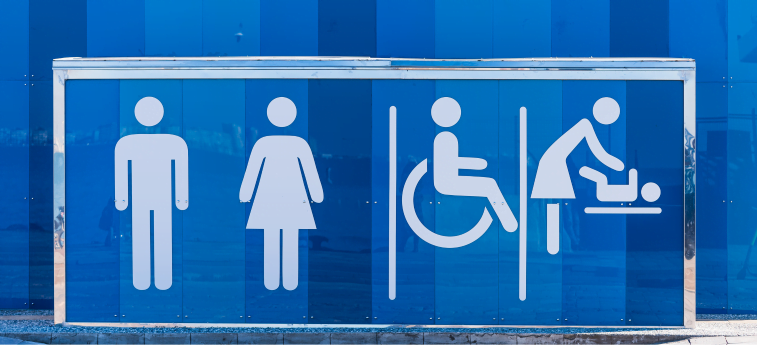
What happened to the service station loo?
Service stations are constantly evolving, with an improved range of essentials along with better quality foods and coffees, but the most important essential being neglected at stations around town are toilets.
A tour of eleven stations in Logan revealed staff members are not always sure why the public cannot access toilets, and they offer different excuses for it.
These range from safety concerns to interpretations that the size and classification of a store at the station dictates whether it should have a public dunny.
Ampol, Shell, Caltex, United Petroleum and Freedom Fuels have public toilets at some of their venues, but not all.
A Shell Meadowbrook employee said they were not classified as a restaurant, so they did not need to provide public toilet access.
A worker from Puma Loganlea said most Puma stores have them, but it depends on the size of the venue.
Most 7-Eleven stations do not offer public toilet access at most of their stores under company policy.
Toilets are mostly located in “secure” areas accessible only to staff, which would otherwise present occupational risks to members of the public, a 7-Eleven spokesperson said.
This is creating awkward conversations at the counter.
One 7-Eleven Logan City worker said they have no option but to tell busting patrons that they must relieve themselves at a nearby McDonalds or KFC.
Former Division 8 Alderman Bob Lye said it is wrong to have Queensland planning legislation and a Logan planning scheme that does not require toilets in service stations.
“I don’t believe it’s fair and just to the public, especially given that under federal law, if you’ve got a shopping centre, you must have toilets also for wheelchair accessibility,” Mr Lye said.
He said stations are more than destinations for refuelling. They function as miniature supermarkets and convenience stores, and occasionally have restaurants incorporated in them.
At some point in the last 30 years, the requirements for service station toilets has changed.
“As a condition of approval, stations had to have a male and a female toilet, but now according to certifiers, it’s not [needed] as part of a building,” Mr Lye said.
Chevron Australia, which manages Puma stations, is on the front foot advocating for toilets at their stations.
A Chevron spokesperson said “clean, safe and well maintained toilets are a key element of its customer service”.
“Our research shows customers expect toilet facilities when they visit service stations and we are happy to provide that service,” the spokesperson said.
In the coming years, Chevron is investing significantly into upgrading toilets at their stations.