


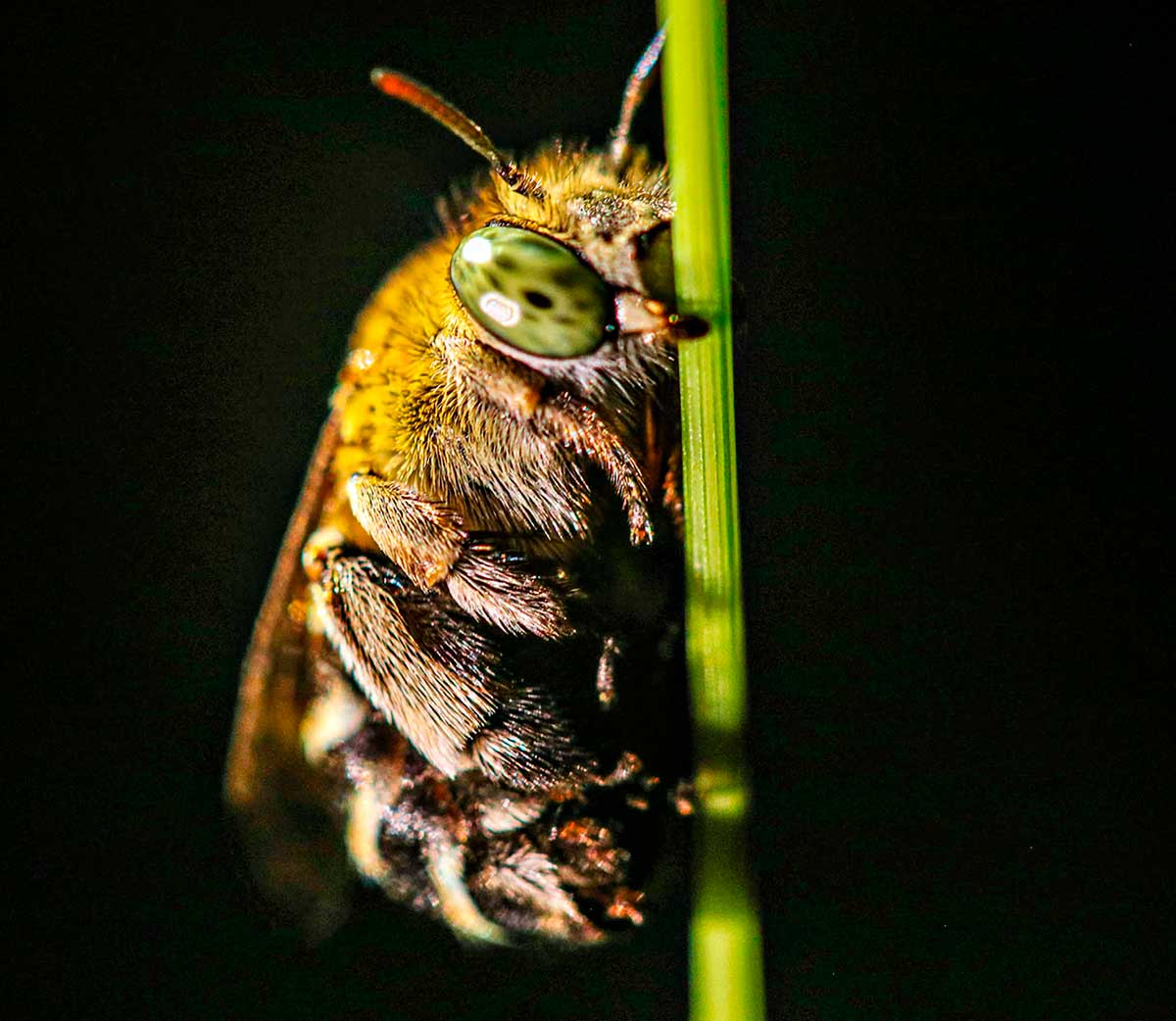
A Daisy Hill beekeeper is hoping her photo of an Amegilla solitary bee will help raise awareness of the importance of native pollinators.
Norma May Honey’s Alison Shepherd is entering her photo – titled pollinators power the planet – in the World Wide Fund for Nature photography competition.
Ms Shepherd, who also works as a bee educator as one half of The Girls in Pink, said she was really proud of her photo.
“In a time when AI-generated images are becoming increasingly common, I’d love your support for a photograph captured through genuine time, patience and passion,” she said.
“The aim is for people to be aware of not just our European honey bees, but our beautiful ground nesting bees as well,” Ms Shepherd said.
Solitary bees are estimated to make up 90%-95% of the world’s bees.
The Amegilla female uses her mandibles to dig a burrow in the ground, while the males gather in groups and sleep by clamping onto plant stems using only their jaws, hovering their legs in the air.
The Australian Museum says this species of bee can extract pollen from plants honeybees can’t access by grabbing the flower and vibrating its entire body — literally “head-banging” the flower to trigger a resonant frequency that violently sprays the pollen out onto its furry body.
Vote for Ms Shepherd’s photo via wwf.
Subscribe to stay up-to-date with news from across Logan. You’ll receive a link to our digital newspaper direct to your inbox each week. It’s free.