


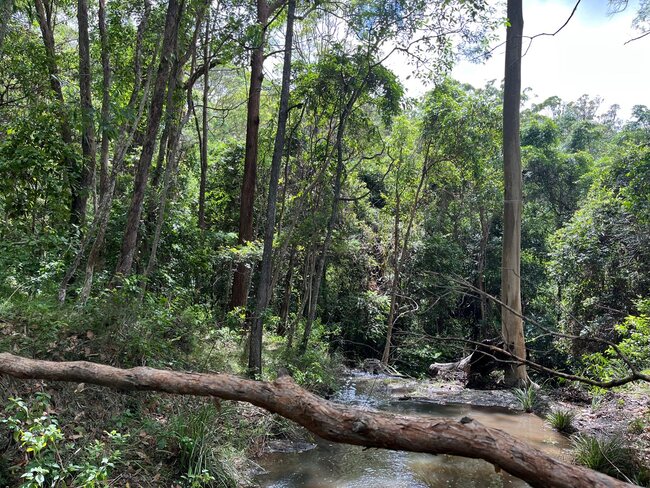
Environmentalists are praising the decision of a local property owner who has sold part of their land to the state government so it can be added to the Daisy Hill Conservation Park.
But they said more needed to be done to stop species like koalas from becoming extinct.
The 213-hectare parcel will be formally added to the conservation park later this year.
The protected area is home to a variety of species, including koalas and red-necked wallabies.
The urban sustainability organiser at the Queensland Conservation Council, Jen Basham, said the government’s purchase was essential to improving the local ecosystem.
“Local environment and community groups have been calling for the protection of this Daisy Hill site for years,” Ms Basham said.
“It’s a much-loved green space, where many people experience wildlife including koalas in a natural setting.
“We know our population is increasing, and housing is expanding and taking over more land.
“We need to ensure that new housing doesn’t come at the expense of the last remaining habitat for our beautiful native animals and plants.”
Ms Basham said it was important to protect, restore and connect local green spaces and habitats for the sake of future generations.
“The bushland of many local government areas across South East Queensland continues to decline, getting us dangerously close to dropping below the point where healthy ecosystems can be maintained,” she said.
“This is not just important for humans in terms of maintaining a healthy environment, our city ‘lungs’, our precious freshwater systems and liveable communities.
“But is absolutely essential if we are to save our iconic endangered species, such as the koala.”
The Daisy Hill park is managed and conserved by a group of local volunteers.
The group’s coordinator, Jim Napier, said the government’s purchase was “great news” for Logan residents and park visitors.
“It’s also great news for our native wildlife and the environment,” he said.
“It will provide and protect vital wildlife corridors between the Daisy Hill Conservation Park and the Venman Bushland National Park, as well as offer more nature-based recreational opportunities for all to enjoy.
“As Daisy Hill natural area volunteers group coordinator, I see firsthand how much enjoyment visitors to these areas’ recreation facilities and the koala centre get from this unique bushland setting so close to the city.”
Ms Basham said despite being one of the most biodiverse regions in Australia, Queensland was doing little to protect its wildlife.
“We have more unique plants and animals in Queensland than any Australian state, but the smallest area protected and dedicated to their survival, at just 8.3 per cent,” she said.
“Queensland needs to double its protected areas to 17 per cent by 2030, and the expansion of this conservation park to become a protected area is a positive step toward achieving that.”
Ms Basham said all local governments needed to aim for “at least 40 per cent bushland and habitat coverage”.