


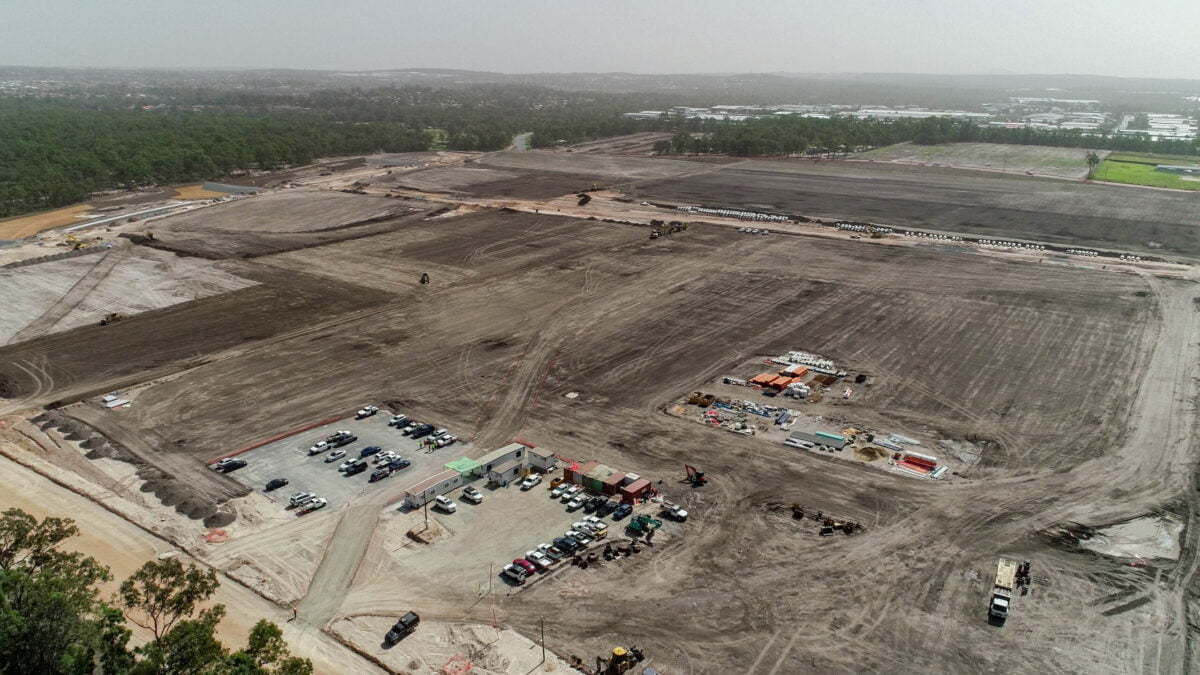
Logan City Council is refusing to build roads to support new developments.
In a stalemate with the state government, Mayor Darren Power says Premier Steven Miles needs to lift a cap on infrastructure charges.
Cr Power has advocated for reform since starting his one-term stint as mayor in 2020, claiming capped infrastructure charges have not kept up with current construction prices, which he said had doubled in 12 years.
He told MyCityLogan ratepayers were subsidising developers the remaining costs that infrastructure charges didn’t cover, which could mean increased rates if unchanged.
He said the charges were only covering 50 per cent of the actual infrastructure cost.
“This is the biggest financial issue Logan has faced,” Cr Power said.
“Logan is the worst affected out of all the local governments because the State wants the majority of our greenfield areas developed.
“Every time we allow for development, we’re losing $30,000 per lot – quite quickly we’ll have to put our rates up, or else we don’t help out with the housing crisis.”
The areas the government has a particularly keen eye on, Flagstone and Yarrabilba, are the “hardest and most expensive” to develop because of the lack of pre-existing infrastructure.
Infrastructure charges are paid by developers to the council to cover the addition of trunk infrastructure, such as water and sewerage required to support new development.
The amount local governments could charge was capped by the state government in 2011.
With Logan tasked with building around 110,000 homes by 2046 – or 5000 homes a year – the mayor said it was costing ratepayers a lot.
A spokesperson for the Department of Housing, Local Government, Planning and Public Works told MyCityLogan charges were not designed to reimburse council 100 per cent of the infrastructure cost.
“Infrastructure charges contribute to a portion of the delivery of new or improved infrastructure that is shared between multiple developments such as water supply, local roads and sewerage,” the spokesperson said.
“They are not a full cost recovery mechanism.”
Cr Power said council couldn’t sustain the current level of construction.
And although he’ll soon be departing his role, Cr Power said he wouldn’t leave without a fight.
“Council has already reviewed its capital works program, and taken out all the roads that lead to more developments,” he said.
“We’ve got all this land that’s been approved for rezoning and subdivision, but council is not building the roads so developers can’t get to those blocks.
“We’re stopping supply because we don’t have enough money to build those roads.”
He said council couldn’t contribute if it was broke.
“Council has to borrow hundreds of millions of dollars each year to pay for the infrastructure around those priority development areas [Yarrabilba and Flagstone],” Cr Power said.
The department spokesperson said by rejecting loan offers from the state government, council would only prolong “existing development challenges” and “deny Logan the chance to thrive and develop sustainably”.
“Logan Water, which is subsidiary of the Logan City Council, was awarded provisional approval for ten million dollars of loan funding for sewerage infrastructure to unlock over 700 lots,” the spokesperson said.
“Logan Water withdrew their application upon receipt of this provisional approval without explanation.
“By rejecting this infrastructure funding Logan City Council misses out on resources.”
Cr Power said the state government could build the infrastructure if it wanted to.
“… but we won’t,” he said.
He said council’s construction costs had risen by 60 per cent in just two years.
“We’ve worked out at that it has gone up at least 100 per cent in the last 12 years, and that means for every block, council and the ratepayers of Logan are subsidising the developer by $30,000,” he said.
He said the Queensland government knew there were issues with capped infrastructure charges but wouldn’t “pull the trigger” until after the state election later this year.
“We’ll bleed for another eight months, as we’ve bled for the past few years,” he said.
“They’re going to wait until after the election because if they pull it now, that means developers will need to pay more and properties will go up.”
The department spokesperson said the state government was working with local councils to “improve the transparency and accessibility of infrastructure charging and spending information”.
“Regular monitoring and reporting are essential to ensuring that infrastructure planning can respond to changing circumstances and emerging trends,” he said.
“This ensures there is a clear line-of-sight between levied charges, infrastructure delivery and proposed future expenditure for the delivery of infrastructure.”
Cr Power said it was up to the next council to continue the fight.