


Beekeepers have been asked to keep an eye out for tiny parasites in the Queensland bee population.
Fortunately, local beekeepers are yet to find any.
The Queensland government has set a goal of 15,000 beehive checks to ensure the state remains free of varroa mite.
Varroa mite, also known a varroa destructor, are parasites that latch onto honeybees and their brood, transmitting viruses and weakening bees’ immune systems.
Although none have been detected in Queensland, they have been found in New South Wales.
Beekeepers have been told to look for unexpected hive deaths, deformed bees, parasites, poor brood patterns and dead brood.
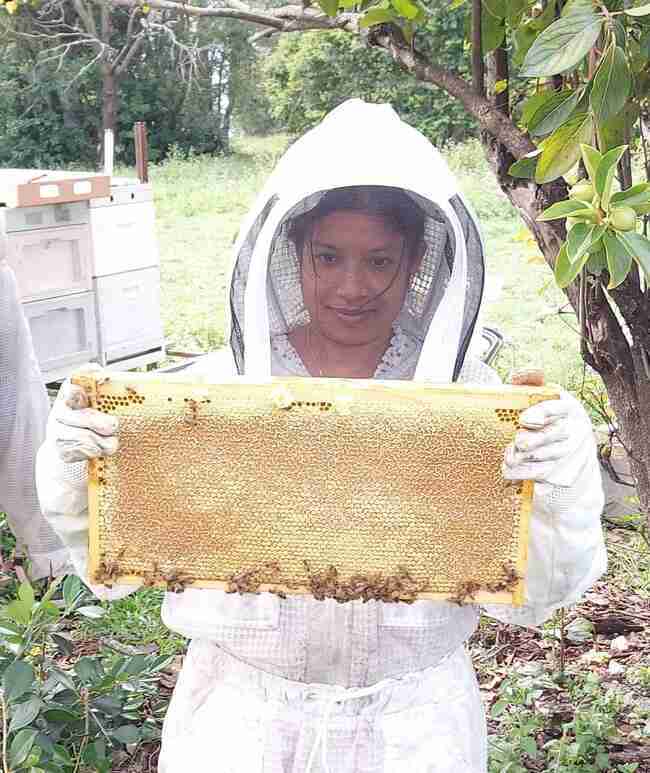
Eagleby beekeeper Sushama Samanta and husband Barun are on the lookout for the pest.
They use methylated spirits to detect mites, which is the government’s preferred method.
The testing requires 300 sample bees to be placed in a jar half filled with alcohol.
Then, the jar is shaken for two minutes before the alcohol is filtered, leaving behind dead bees and any present mites.
“We didn’t get any [mites],” Mr Samanta said.
“We haven’t heard about anyone that has caught mites in Queensland.
“I am not too concerned because we are doing these tests.”
Mr and Mrs Samanta have three hives in Eagleby, Willowvale and Upper Coomera.
The Queensland Beekeepers’ Association state secretary, Jo Martin, said the entire country was dependent on the health of the honeybee industry.
“The outcome of the response rests on the shoulders of every beekeeper in Queensland actively looking for varroa mite, undertaking the test, and reporting all the results, with an emphasis on the need for negative data,” Ms Martin said.
“Industry is calling on all beekeepers to be accountable to your bees, be accountable to yourself, be accountable to your industry, and be accountable to the common good.”