


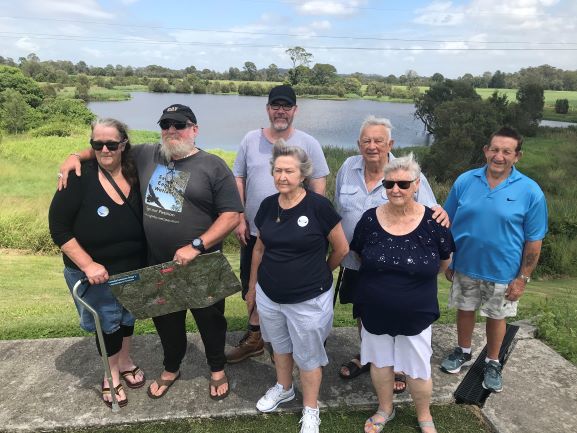
A letter from the group to Australia Zoo, known for its environmental work via the Steve Irwin Foundation and more recently Wildlife Warriors, led to an introduction to environmental lawyer Janice Baird.
Ms Baird said the connector road was likely to impact threatened and migratory species that are protected by law under the Environment Protection and Biodiversity Conservation Act 1999 (Cth).
“If Eagleby Community and Wetlands Group wants the Minister of the Environment to refuse to approve the project, they will need to address the minister’s decision-making criteria under the Act,” she said.
“It is likely that applications for environmental approvals for Stage 2 will be submitted to the Commonwealth government soon. Community groups should be preparing their case for protection of the wetlands as soon as possible.”
Ms Baird, who has been doing work pro bono said she did it for the birds.
“Once you build a road through a wetland, it is lost forever and that is something we’ll never get back,” she said.
“The consultation period for referrals of projects that may impact threatened species under Commonwealth legislation is very short – 10 business days.
“That means that community groups often don’t have enough time to review and prepare responses to referral applications, which can be hundreds of pages long.”
Marilyn Goodwin, who has been fronting the Eagleby Wetlands Group, said adjunct research fellow at Griffith University Dr Ronda Green had also offered assistance to identify the environmental impact on the area.
Ms Goodwin said this takes the fight to save the wetlands to a new level.
The group would now undertake a scientific survey of animals which rely on the wetlands eco-system for survival.
One study would be done in February, and plans are afoot for another in May to monitor the change of seasons and how that impacts the wildlife.
“Under Ronda’s supervision it will entail setting traps and sound monitors overnight with any animals found being recorded and safely released at dawn,” she said.
“This will happen over two nights and sound recordings of micro-bats and other small animals will later be scientifically analysed for identification purposes.
“We already know the wealth of birdlife in this area but there is little known about the equally important micro-fauna dependent on the wetland environment.”
Volunteers will be required to help and can register via the “Save the Eagleby Wetlands” Facebook page.
The alternative path proposed by the group for Stage 2 of the connector road project is a straight line through existing canefields.