


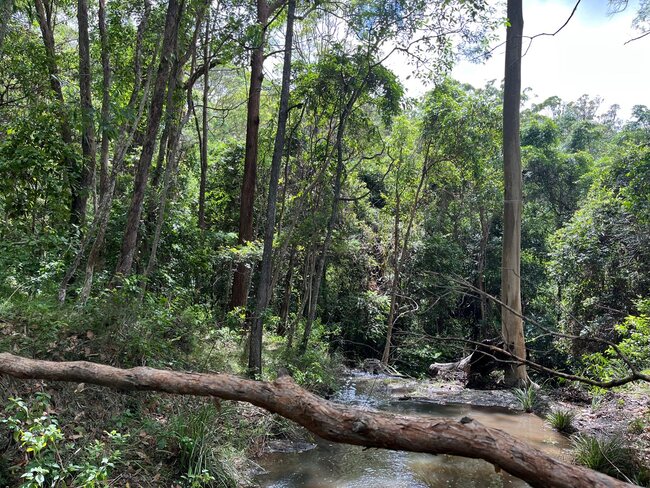
Planned recreational trails through a new section of the Daisy Hill Conservation Park has prompted concern from a veteran environmental advocate who wants the area declared a national park.
Koalas, glossy black cockatoos and other native species living in the Daisy Hill forest are on the mind of Tenah Merah’s Ted Fensom, who has fought for its protection for 30 years.
He fears proposed mountain bike, horse riding and walking trails through a 213ha section of the park, formally owned by the Shailer family and bought by the Queensland government last year, will cause damage to native flora and fauna.
“These mountain bike tracks [in other parts of the forest] are forcing the birds, marsupials and other fauna into pockets,” he said.
“The only place without mountain bikes at the moment is Shailer’s land.”
Griffith University professor of urban ecology and protected area management, Catherine Pickering, said all trails had environmental impacts.
“Well-designed trails have less impacts,” she said.
“There are impacts from the construction of the trail, impacts from the presence of the trail, and impacts from the use of the trail.
“You can model how much loss of pristine habitat is going to be affected.”
That’s why, Ms Pickering said, it is crucial the appropriate environmental impact assessments and designs are in place to minimise damage.
However, of major concern is the creation of unauthorised and informal trails, which Ms Pickering said caused more damage per kilometre and were less safe for riders.
“There is a lot of demand and interest in mountain biking in urban parks, and there can be thousands of people engaging with this activity in Logan.
“It is really important that care is taken as to whether that’s the appropriate activity in that particular location.”
Mr Fensom wants the forest named a national park. But Ms Pickering said the upgraded status would not necessarily protect mountain bike and horse trails from being developed.

Springwood MP Mick de Brenni, who was part of the previous government who purchased the 213ha land, said the state had been “mindful of local community views in the past”.
“…however with the LNP now in charge, there are legitimate concerns arising,” he said.
“The Daisy Hill Design and Delivery Group, made up of local representatives has been responsible for the careful management of investment in the Conservation park in recent years.
“The Group fought hard to urgently declare the Shailer property as part of the Conservation Park before the LNP took office, to ensure a careful balance of active recreation and conservation, especially maintaining amenity for local residents.
“The consultation process is now being run by external consultants on behalf of the new government, creating real concern the spirit of collaboration that is central to the success of these projects seems to be missing.”
Mr Fensom was critical of the public consultation process, which he claims was limited and segregated.
A spokesperson from the Department of the Environment, Tourism, Science and Innovation said they wanted Daisy Hill Conservation Park to be a ” world-leader in ecotourism”.
“We’ll balance conservation and the visitor experience through a $400,000 investment in park recreational trails and visitor facilities, of which $250,000 is for new mountain bike trails,” the spokesperson said.
“A comprehensive masterplan is guiding this investment and will help integrate the recently acquired Shailer property into the protected area estate and deliver new visitor facilities.
“Consultation for the masterplan included the local mountain biking community, interest groups, and the broader community, to help shape future facilities and trail networks.”
In a letter to Mr Fensom, an executive director at Queensland Parks and Wildlife Service said the department recognised the “ecological significance” of the land.
“The presence of… endangered regional ecosystems further highlights the need for careful planning and management,” he said.
“Following careful consideration, the area has been designated as a conservation park as part of the broader Daisy Hill Conservation Park, ensuring its long-term protection whil esupporting appropriate recreational use.”