


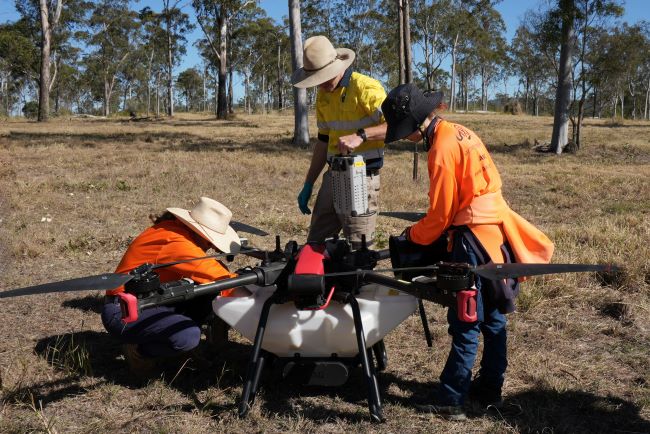
Logan risks losing hard-won ground against fire ants if residents stop reporting and treating nests, a local landcare director has warned.
Cedar Grove Landcare director Rachel Hughes said additional aerial treatment had reduced infestations in her area, but keeping residents informed and involved was essential to maintaining that progress.
“I would have to say if that vigilance stopped, we would be back to square one,” Ms Hughes said.
“We have to be vigilant and we have to be positive and we have to work together.”
A National Fire Ant Eradication Program spokesperson said more than 30,000ha within Logan had been, or would be, treated through the aerial suppression program, and more than 22,000 residents had registered for free yard treatment kits.
The spokesperson said nest counts on selected properties across the wider suppression area showed an average 86% reduction in fire-ant density about three months after aerial treatment.
“It is not a Logan-specific result,” the spokesperson said.
Ms Hughes said she had seen substantial local improvements and remained confident eradication was achievable.
“We have most definitely seen a reduction in the number of fire ant nests here,” she said.
“I absolutely believe that we can beat fire ants.
“If everybody works together in the same mindset, we will actually beat this. We can actually win.”
Infestations along a local walking trail had previously been so dense she carried bait while walking her dog, treating nests as she went.
She said nests were now less prevalent there, and landholders had also reported substantial improvements following aerial treatment.
But maintaining those gains required residents to understand the treatment program and continue participating, she said.
Ms Hughes said some people had lost confidence in slow-acting bait because they expected an immediate result, while others were asking why helicopters were flying over their properties.
“They’re missing the important information, the stuff that really does impact them,” she said.
She said residents needed to know when treatment was happening, how bait worked, where to report nests and how to prevent the pest spreading.
“Just keep reporting because that way they know where they need to concentrate their efforts on and yes, just stick with the program,” she said.
“Don’t give up.”
Ms Hughes warned residents could inadvertently spread fire ants by moving soil and plants without checking where they came from.
“They don’t think about where they’re coming from,” she said.
“Are they in a fire ant zone and could they be transporting fire ants without even realizing it?”
She said the consequences of allowing fire ants to spread extended beyond agriculture to the outdoor activities residents took for granted.
“It affects everything from tourism to food supply to your backyard to sport, kids going to school,” she said.
The National Fire Ant Eradication Program spokesperson confirmed fire ants remained present in Logan and urged residents to keep checking their properties.
“Anyone who reports fire ants will receive a free fast-acting nest treatment kit to help protect families, pets and properties until eradication treatment reaches their area.”
Residents can report suspected fire ants at fireants.org.au or by calling 13 22 68.