


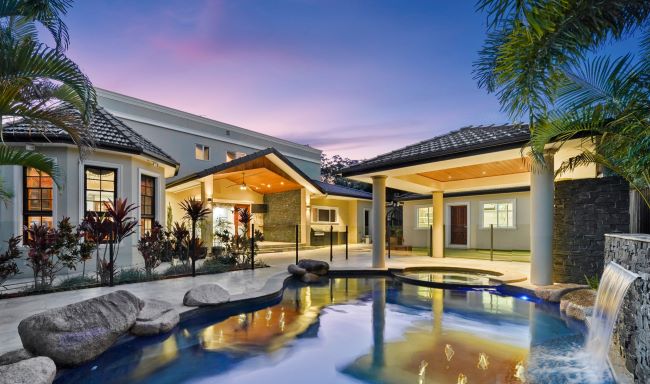
Behind a three-metre cedar door, a six-metre entrance void opens into the Daisy Hill house where the current owner’s family found room to grow, work, play and live together.
From the balcony, distant hills rise beyond the surrounding bushland, while birds provide the perfect early-morning soundtrack.
“Every morning, I wake up to the sound of the birds,” the owner said.
“When I go to my balcony, I can see the hills far away.”
The five-bedroom house at 29 Lynette Way was built by a husband-and-wife team — one Swedish and the other Russian — in what the owner understands was among their final projects before retirement.
She and her husband bought it in December 2017 while expecting their second child.
“What caught our eyes was how solid it was,” the owner said.
“A lot of houses in Australia are made from wood, but this house looked very solid.”
Concrete construction is paired with extensive timber features, including solid timber flooring and embedded wood throughout the interior.
The owner said the materials had been carefully selected by the builders for their durability and ease of maintenance.
The house’s dual-living layout soon became central to family life.
Two kitchens and internal doors allow the building to be divided into separate living areas, giving visiting grandparents privacy while keeping them close to the family.
“Our parents could live in the other part and do their things, while we did our things,” the owner said.
“When the baby was crying, they could still sleep quite well.”
That flexibility became even more valuable when the COVID-19 pandemic confined the family to the house.
The owner, a senior finance executive, worked remotely from the large study while her children completed online schooling and escaped to the private cinema.
Her husband could retreat to the backyard putting green.
“Everybody found their space and their favourite spot in this house,” she said.
The property also includes a swimming pool, media room and enough space for large gatherings.
The owner recalled hosting about 30 people for her son’s eighth birthday without the house feeling crowded.
Her husband added personal touches to the mostly paved gardens, carefully selecting roses, fruit trees and other plants.
One carries particular meaning.
The ginkgo tree he planted about six years ago has grown alongside the family.
“We were saying that if we sell this house in 2026, probably in 2036 we could come back and see that tree again,” she said.
The family is selling to move closer to their children’s schooling and sporting commitments at East Brisbane.
The owner hopes the next owners will value the house’s solidity, unusual design and ability to adapt to the people living inside it.
“It’s not only a living space,” she said.
“It’s a place to reunite the family and have quiet evenings and mornings.
“Hopefully I’ll get a good buyer who loves this place and enjoys the style.”