


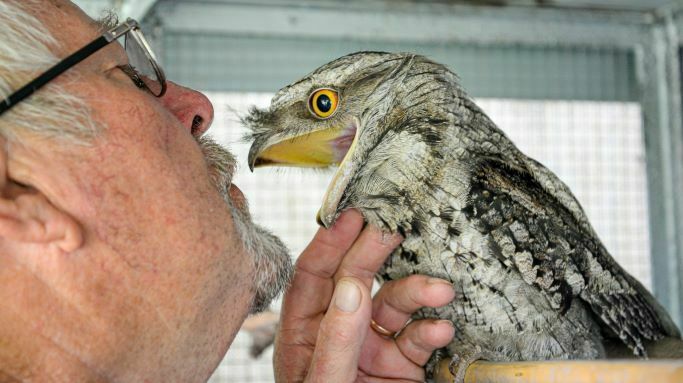
During the floods, the home of Bob and Maureen Wiley had up to 40 wild animals being nursed back to health.
Their property was ankle-deep in water.
Their living room, a virtual animal hospital, had sick and injured possums and gliders receiving treatment. Outside in aviaries, there were tawny frogmouths, kingfishers and corellas.
“The backyard was under 150 millimetres of water,” Mr Wiley said.
“With floods, you just get inundated with animals which have been washed out, or blown out, of their habitats,” Ms Wiley said.
And while Cornubia wildlife carers Joerg and Anja Rockstroh weren’t flooded, they too were caring for an influx of animals, in particular injured and abandoned flying foxes.
The couple is currently caring for 17 of the fruit bats and have had up to 30 at times in their backyard aviary.
The Rockstrohs, who moved to Australia from Germany 14 years ago and instantly fell in love with our native animals and plants, spend thousands of dollars each year in food and housing costs to rehabilitate wildlife.
Logan City Council is extending the deadline for submissions to its EnviroGrants program until March 31, and has doubled the amount of money available from $1500 to $3000.
The extra money is due to the number of animals impacted by the floods.
“We hope to build a second aviary so any help with that would be a boost,” Mr Rockstroh said.
Last week, council announced that up to 1000 free native trees/plants would be offered to each flood-impacted property to support stabilisation and restoration of the waterway banks.
“We know that flooding impacts animals as well as people and our carers do an amazing job getting sick, injured and abandoned animals back to health,” deputy mayor Jon Raven said.