


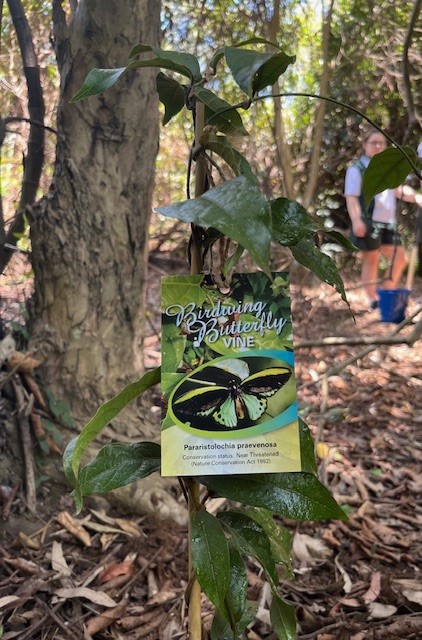
An overgrown creekline at Windaroo Valley State High School is being reclaimed plant by plant as students turn it into a living classroom for conservation.
Senior students are creating an educational nature trail through the school’s science in practice subject, restoring habitat for vulnerable wildlife while tackling weeds, litter and erosion.
Science teacher Belinda Williamson said her ecology students were spending three lessons each week beside the creek.
“My classroom is literally at the creek for three lessons a week at the moment,” she said.
Students investigate threatened wildlife found across Logan before choosing how they will strengthen the school ecosystem.
Some are planting Richmond birdwing butterfly vines and koala food trees.
Others are building nesting boxes, removing invasive weeds and rubbish, or revegetating creek banks to protect water quality.
“Often they’ll focus on a particular threatened animal or a species and then work out, ‘what kind of plant can I add to help that animal?’” Ms Williamson said.
“We’ve got a bush-tucker section as well where the plants are specifically bush-tucker types of species.”
“It’s not me telling them what to do,” she said.
“It’s their project that they’ve got ownership of.”
Future classes are expected to continue the work.
“Each year we can build upon what previous years have done,” she said.
Logan City Council awarded the school $2000 through its 2026 EnviroGrants program to install the trail’s first three permanent educational signs.
The signs will identify native plants and explain their connections to local fauna, including the Richmond birdwing butterfly and glossy black-cockatoo.
QR codes are intended to lead visitors to student research, monitoring data and seasonal observations.
Ms Williamson said birdwing vines had proved especially popular, despite the butterflies not yet being recorded at the school.
“I get lots of students interested in that one even though we don’t have any butterflies yet,” she said.
The school plans to add more signs each year and incorporate information about Aboriginal and Torres Strait Islander uses of plants such as lomandra and paperbark.
“A wonderland. I want it to be a wonderland,” Ms Williamson said.
“It could be something special for everyone to use.”
The transformation will require persistence. Weeds remain a constant challenge, and some plants have struggled without regular watering during school holidays, Ms Williamson said.
A planned before-school environmental club would help students weed, water and maintain the trail when the ecology unit is not running, she said.
“We want to pair it up with an environmental club which will be starting soon before school, just so we can get other students out there helping to clear the weeds, keep the plants alive [and] keep the trail clean,” Ms Williamson said.
For Ms Williamson, who has worked at the school for 24 years, the project could give students a living reminder of their time there.
Trees planted elsewhere by former classes have already become lasting markers.
“They can come back and say, ‘that’s my tree’,” she said.
“That’s pretty special.”
Subscribe to stay up-to-date with news from across Logan. You’ll receive a link to our digital newspaper direct to your inbox each week. It’s free.
Follow MyCity Logan on Facebook and Instagram