


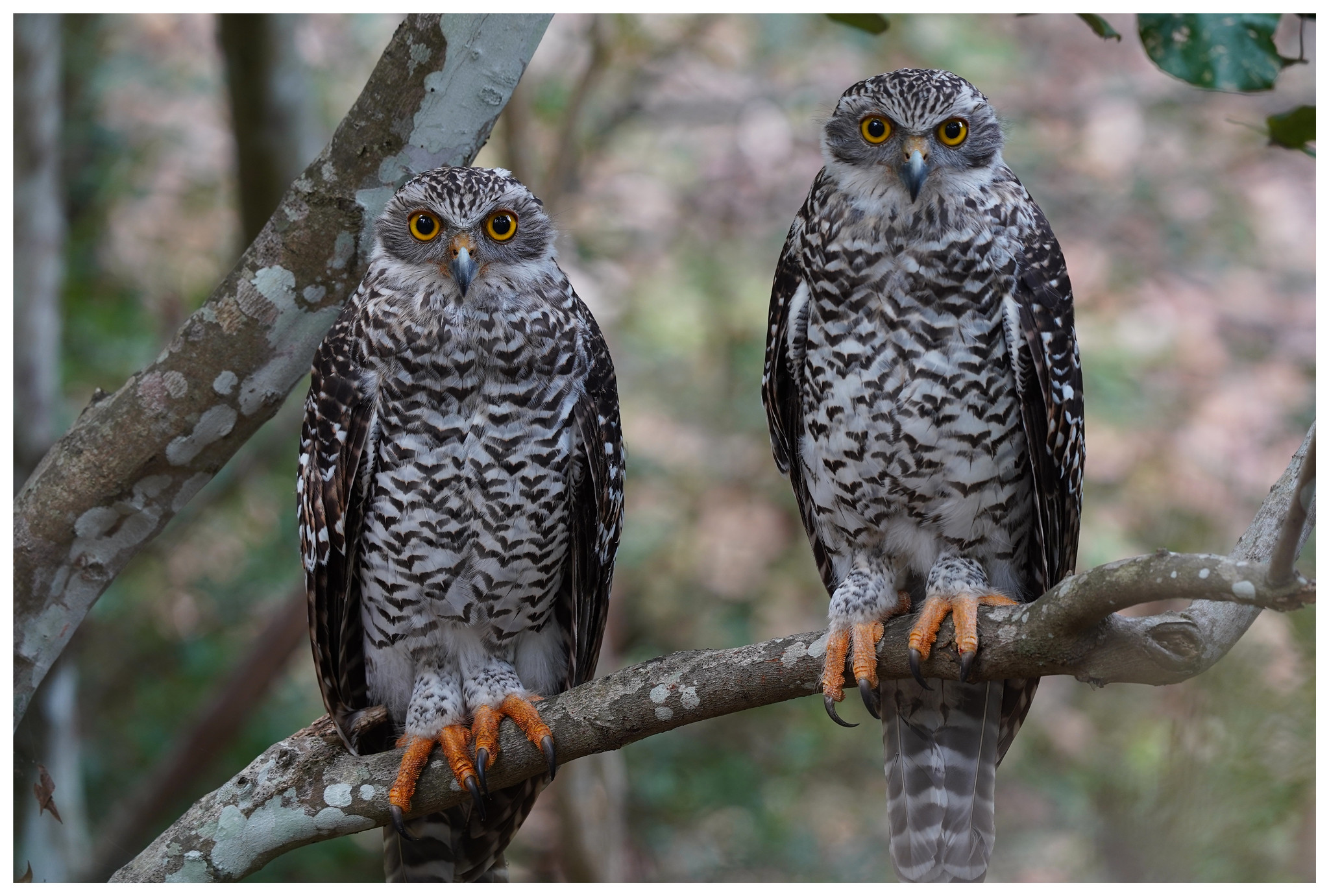
If you’ve heard a deep “whoo… whoo” echo through the night in Logan, you may already have encountered one of Australia’s most impressive but little-known predators.
Now, lifelong conservationist Andrew Dinwoodie is inviting locals to learn more — and practise their own owl calls — when he speaks about powerful owls at Logan’s Eco Action Festival on June 7.
At the festival, Mr Dinwoodie plans to have audiences mimicking powerful owl calls, but behind the fun is a serious message: powerful owls are already living in Logan and need help.
“We have them in the area. You’ll find them in remnant bushland and, importantly, along creek corridors,” Mr Dinwoodie said.
“These waterways, often overlooked, are critical wildlife corridors providing cooler conditions, dense vegetation and access to food.
“In a rapidly growing city like Logan, they are increasingly important refuges for native species.”
At around 50cm tall, powerful owls are Australia’s largest owl species and often stop people in their tracks.
“They just go ‘wow’ – they’re such a charismatic animal and perfect for getting people involved in protecting habitat,” Mr Dinwoodie said.
But he said that habitat was under pressure across Logan and South East Queensland, with powerful owls relying on large, old eucalyptus trees, often more than 150 to 250 years old, to nest.
“Without them, entire breeding cycles are lost. Powerful owls need hollows big enough to fit a bird that size, plus a couple of chicks,” he said.
In urban areas such as Logan, powerful owls can still find food, including possums, flying foxes and birds, but suitable nesting trees are harder to come by.
Through the Powerful Owl Project, Mr Dinwoodie works with residents to track sightings, monitor owl activity and gather crucial data, but said more local volunteers were needed.
“We have some really excellent long-term volunteers in Logan, but there are plenty more sites we could be monitoring,” he said.
Even simple reports — a sighting, a call heard at night or a sudden swoop — can help show where owls live and how they use the landscape.
“All it takes is people sharing what they see or hear,” Mr Dinwoodie said.
With Logan expected to keep growing, Mr Dinwoodie said the challenge was finding a balance between development and nature.
“We know more people are coming,” he said.
“So how do we design it so we can have people and owls living here together?”
Mr Dinwoodie will speak at LEAF at 10.50am on June 7, with the festival running from 9am to 3pm at Griffith University’s Meadowbrook Campus.
You can hear a recording of a powerful owl call at https://birdlife.org.au/bird-profiles/powerful-owl/.