


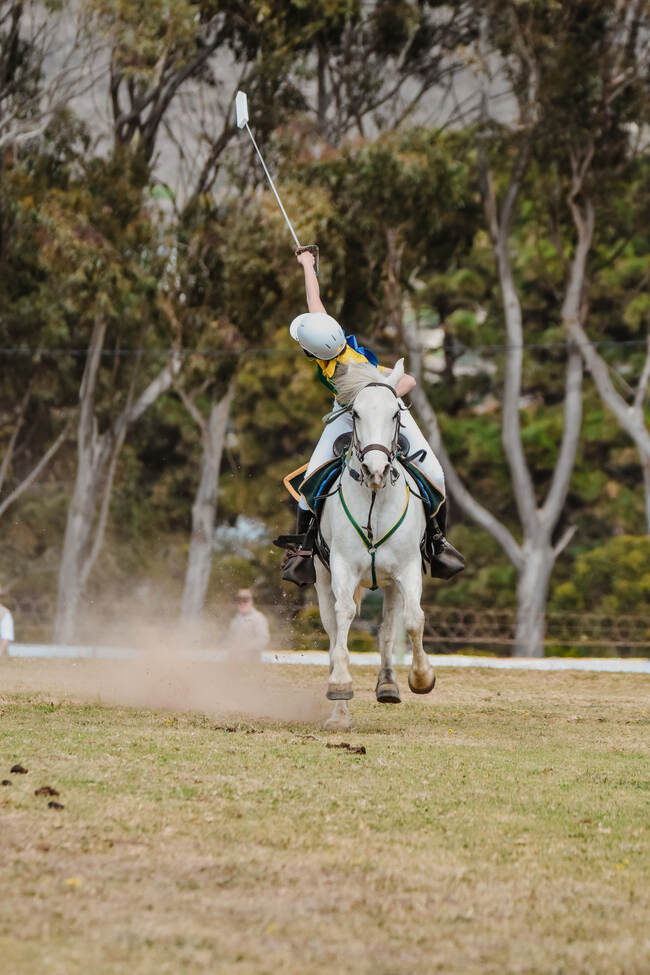
Tent pegging is a sport you might not have heard of, but it’s one Jimboomba siblings Samantha and Steven Gurney are dominating.
The Hills International College students were two of five riders representing Australia in a tent pegging match against South Africa this year.
As a team, the Australians brought home the silver medal.
Samantha (year 12) and Steven’s (year 11) father, Brad Gurney, who has competed in the sport since 1996, is the Australian tent pegging team manager.
Tent pegging is one of 10 equestrian disciplines in mainstream sporting repertoires and was designed (or created by) service personnel, Mr Gurney said.
“It [tentpegging] was designed back in the days when we had a lot of military people on horses in wars,” Mr Gurney said.
“These were activities designed to improve the techniques and skills of the military personnel.
“It created a competitive atmosphere among riders and people in the military or the police to improve their horse riding skills.”
Mr Gurney said he hoped tent pegging would be added to the list of equestrian events in the 2036 Olympics, one Olympic cycle after the Brisbane games to be held in 2032.
The sport is not as obscure as you’d think. Mr Gurney said the viewership for the match held in September was extensive.
“The last event we went to in South Africa was live-streamed to 52 countries, that’s sort of gives you some perspective,” he said.
Mr Gurney has travelled to tent pegging competitions overseas several times before, including to South Africa.
But it was Samantha and Steven’s first time competing in a major international competition.
“As you move from one country to another, the horses are quite different, and you don’t realise ahead of time how different they’ll be,” Mr Gurney said.
Mr Gurney said the majority of horses used for tent pegging in Australia were thoroughbreds, which behave and ride differently from the type of horse most common in South Africa.
“Their traditional horse is what they call a Boerperd, which has lots of stamina and is tough, but they’re a quieter type of horse.
“They’re not as reactive or flighty as the thoroughbreds we’re used to in Australia.
“When we arrived, I was able to organise a training session for the team to test what the horses would be like to ride, so that helped us prepare for the competition.”
The international tentpegging format sees competitions run over a four-day period, where the horses run six times per day, to prevent fatigue in the horses.
There are about nine program items or events that each team must compete in over those four days.
“You get a huge amount of adrenaline in the events, because the horses are going flat out and you’ve got to control that adrenaline and keep the horse calm,” Mr Gurney said.
“It’s pretty exciting, from my perspective, to be able to travel overseas to compete with the kids.”
Image: Steven Gurney competing in a tent pegging event in South Africa. Catherine Gurney.