


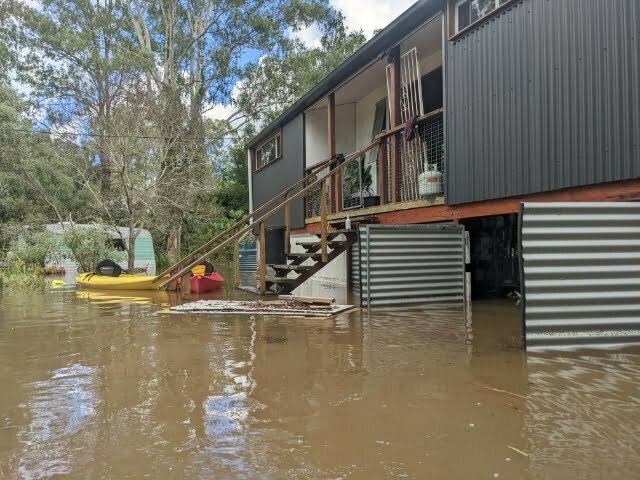
After the 2017 floods brought on by Ex-Tropical Cyclone Debbie, a Cornubia local reinvented his home to combat flooding, and last week the redesign passed its first test.
The thought of enduring another flood was a turning point for animation lecturer Chris Denaro, who changed his home with some simple strategies he hopes others can use to limit the heartache of future floods.
He still remembers the stench of mud as it clung to his possessions in 2011, 2013 and 2017.
“It was really stressful those first two floods,” he said.
“2017 was really big, and in 2013 it was 10 cm under the house because we back onto a creek backing onto the Logan River.
“Even this one was really stressful because if it had of gone higher we would have lost half the house.”
As daunting and painful the prospect of dealing with the aftermath of a flood is, he said the recovery stage is an ideal time to reconsider the layout of a house or the functions of spaces within in it.
“I am surprised that people don’t talk about this, especially in a flood prone area,” he said. “A bit of forethought, different building materials, and some simple decisions can save a lot of money and heartache.”
Mr Denaro lives in a high set house on stilts with a concrete-slab basement used for storage. The basement is encased with light weight materials and has a strict “no carpet or timber floor policy” since it is on a flood prone level. The materials most susceptible to water damage are used on the top level.
To mitigate flood damage, he changed the positioning of critical infrastructure, added vents underneath the windows to redirect waterflows, and rethought how he stored belongings.
“We needed to renovate downstairs to make another area, so we just did it with concrete, glass, metal, and put power points on the ceiling, and moved the junction and fuse boxes up higher.
“We gave ourselves 2m of room for the next flood, and we did the same thing with the shed when we renovated that.”
“It’s simple, but it all worked.”

He said the biggest problem was raising access points for electrical outlets so they were off the floor, which improves the chances of keeping the power on in a disaster.
“The big thing was the power,” he said.
“The electricians didn’t want to do that, they don’t like it on the roof, so we had to really argue that to them.”
He then added the vents under the windows and brought in heavy duty shelves on wheels for possessions.
“Underneath the glass windows we made channels for vents, like an air vent so we can hose the water out underneath the channels on the floor,” he said.
“The most important things are on moveable industrial shelving units so you can move them around when you need to – it’s just a way of thinking about it.”
If time, space, and money allows, he also suggested establishing an external storage compartment above the ground. His take on this is a raised shipping container, which just managed to remain above last week’s flood.
“We got it council approved on footings to be a foot-and-a-half above ground height,” he said.
“That’s where the flood got up to this time, so we’re going to try and put another container on top of that for storage to get out of floodwaters, but we might make a studio out of it for somewhere to go to if this is flooded again.”