


A father of five was forced to leave his Regents Park home after last week’s devastating storm ripped away the roof, as emergency crews received hundreds of calls for help across Logan.
At least 315 requests for SES assistance were lodged following the Wednesday 11 November supercell, with structural damage accounting for almost half and emergency crews warning that more damage could emerge inside affected houses.
Marsden, Regents Park and Crestmead suffered the worst structural damage, Logan Mayor Jon Raven says, while thousands of residents were left without electricity across the city.
For Regents Park father Chris Simpson, the destruction meant finding somewhere safe for his five children.
According to a fundraising appeal launched by Jacinta Brown, the roof of his rental house was torn away, leaving the property unable to be waterproofed with tarpaulins.
The family was advised to leave.
“Please consider donating where possible, so this family has somewhere safe to stay in our community,” Ms Brown wrote.
Their ordeal was among the human consequences of a storm that tore through neighbourhoods, brought down trees and powerlines and left emergency crews confronting widespread damage.
SES South Eastern regional director Scott Revell identified Crestmead, Logan Village, Marsden, Chambers Flat, Jimboomba and Waterford among the hardest-hit suburbs.
Cr Raven also identified the suburbs where houses and electrical infrastructure had suffered most.
“The biggest structural damage is in Marsden, Regents Park, and Crestmead,” he said.
“There was massive damage to electrical infrastructure in Logan Village, Yarrabilba, Chambers Flat, Jimboomba and Park Ridge.”
At the height of the emergency, more than 80,000 customers across Energex’s south east Queensland network lost electricity.
By Friday afternoon, 5720 customers in Logan remained without power, accounting for almost 98% of the network’s outstanding outages at that time.
But emergency crews warned some of the damage could take longer to become apparent.
Mr Revell said water may have entered some roof cavities, soaking insulation and causing ceilings to collapse inside houses.
“They might not necessarily know there’s been inundation into their roof,” Mr Revell said.
Mr Revell said photographs supplied to the SES showed trees across roofs and driveways, while fallen powerlines complicated access to damaged properties.
By 11am Thursday, crews had completed 59 of the 315 requests for help, leaving 256 outstanding.
Structural damage accounted for about 46% of requests, with fallen trees responsible for another 30% Mr Revell said.
Mr Revell warned more residents could discover damage as they returned to their houses or water continued to affect ceilings.
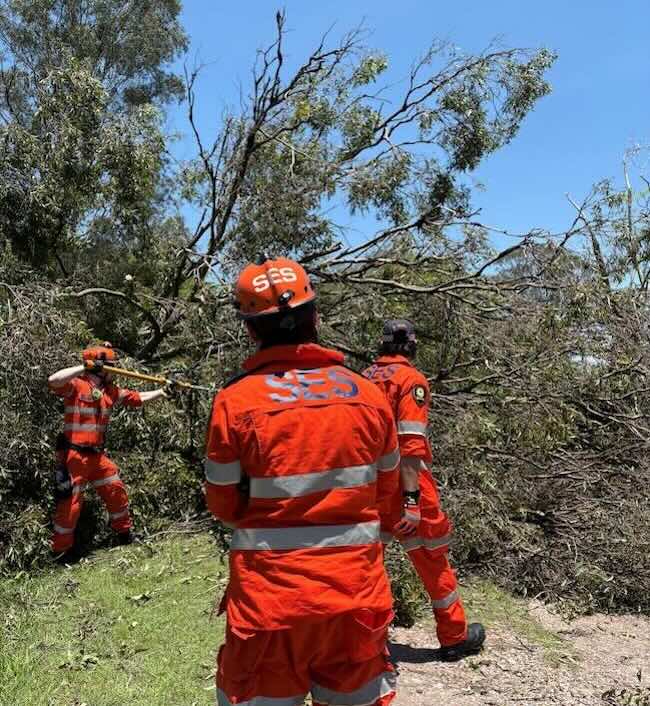
Extra SES crews and Rural Fire Service chainsaw teams joined the response, prioritising immediate threats to people and property.
The storm also disrupted electricity supplies at Logan and Beaudesert hospitals, which briefly switched to generators.
A Metro South Health spokesperson confirmed essential clinical services continued throughout the disruption and both hospitals subsequently returned to normal operations.
“Logan Hospital and Beaudesert Hospital experienced a temporary loss of mains power during [Wednesday’s] severe weather and switched to generator power for a short period,” they said.
In the days following the storm, Logan City Council organised access to community spaces offering showers, laundry services and phone charging, while clean-up crews worked to clear fallen trees and debris.
Cr Raven acknowledged the toll on affected households.
“I know this can be a stressful and upsetting experience for many families,” he said.
Subscribe to stay up-to-date with news from across Logan. You’ll receive a link to our digital newspaper direct to your inbox each week. It’s free.