


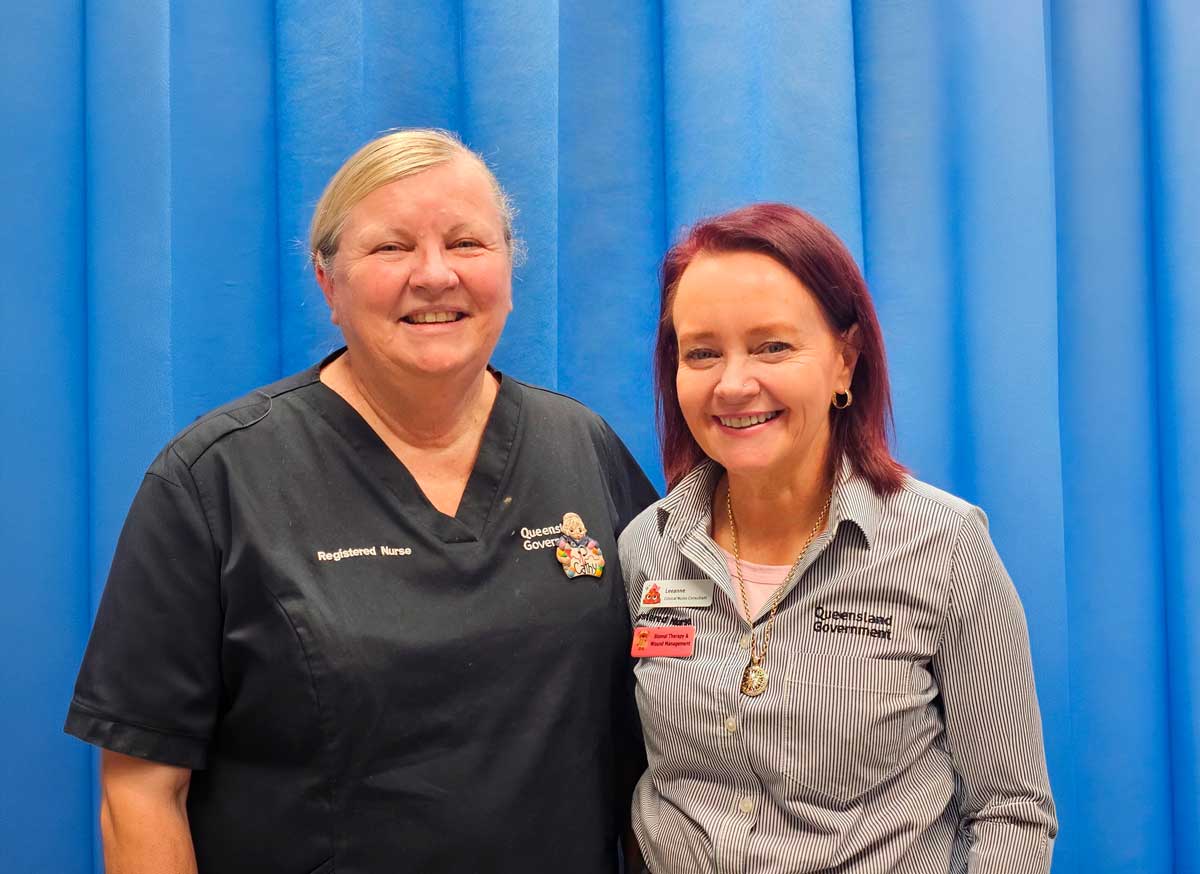
When Logan Hospital nurse Cathy Kindness told a Marsden woman her leg wounds could be healed by Christmas, the patient had one weary question.
“Which year?”
After three to four years of pain, repeated dressing changes and treatments that had failed to heal her ulcers, the woman no longer believed there was a way out.
“When I started working with her, I said, ‘Let’s aim to have this healed by Christmas’,” Ms Kindness said.
“She said, ‘Which year?’ And I said, ‘This year’.”
The woman is now largely off her pain medication, able to walk independently and leave her home again.
“She is a completely different person,” Ms Kindness said.
“She can see the light at the end of the tunnel.”
Her recovery exposes the hidden damage caused by chronic wounds — and the difference the right care can make.
More than 450,000 Australians experience wounds that are slow to heal, only partially heal or repeatedly return each year.
Wound Awareness Week runs from Monday 28 September and Logan clinicians are urging residents not to dismiss a cut, scratch or knock that does not seem to heal as it should.
“Life is what causes leg ulcers — or what starts the whole thing,” Ms Kindness said.
“New shoes, a scratch on the coffee table, a bang on your walker or shopping trolley, a scratch on the car door — very simple things.
“I’ve had grandma watching the grandkids’ soccer game and the ball comes off the field and bangs grandma on the shin.
“If your circulation is compromised, if your nutrition is a bit average, if your mobility isn’t the best, if you’re diabetic or if you smoke, all of these things work like dominoes.
“They all add up and impact your healing.”
She said leg ulcers were more common among older people, but could affect adults of almost any age.
“It’s not just something that happens to grandma,” Ms Kindness said.
“It can happen to essentially any adult.”
Logan Hospital clinical nurse consultant Leeanne Johnson has seen the consequences firsthand.
“We had a gentleman who was tending to his chickens and the chicken wire scratched his leg,” Ms Johnson said.
“He ended up with a big exposed wound that took us months and months to heal.”
She said a seemingly minor injury could deteriorate before someone understood what was happening.
“If the skin is red and hot and angry and they’re feeling unwell, they need to get help quickly,” Ms Johnson said.
That warning is particularly timely as Logan enters the warmer months and insect bites become more common.
“A small insect bite can become cellulitis that can become a venous leg ulcer,” Ms Johnson said.
“If people start looking at skin protection now, that can help them not end up in hospital in January or February.”
Even experienced clinicians can discover how easily wounds remain hidden and Ms Kindness said her experience reflected an attitude she regularly encountered among patients.
“It’s called ‘I’ll be right’,” she said.
“It’s ‘I’ll be right’ until you’re not.”
Ms Kindness said clinical treatment was only one part of recovery because healing ultimately depended on the patient and the underlying causes being addressed.
“The dressing doesn’t heal the wound — the patient heals the wound,” she said.
“The patient needs to have good nutrition and hygiene, address mobility and address other health issues like poorly controlled diabetes, infection or problems with their circulation.”
Care must also be sustainable outside the clinic.
For the Marsden woman, that included educating her family and finding compression garments she could use with her husband’s help.
“We worked with her to create a viable wound-care plan that she could manage, she could afford and she could access support for,” Ms Kindness said.
“Seeing progress gave her confidence in the service that we would be able to help her, and she’s just gone leaps and bounds from there.
“She went from changing the dressing multiple times a day to having a dressing last several days.
“She has reduced pain, reduced cost and improved quality of life.”
Wounds Australia will formally launch its free Be Wound Aware Education Series on Tuesday 29 September, with short lessons on caring for wounds, protecting skin, recognising warning signs and stocking a home first-aid kit.
Ms Johnson encouraged people whose wounds were worsening or failing to heal to seek professional advice and ask their doctor about referral to a specialist wound service.
“People don’t have to wait and suffer in silence at home,” she said.
“It might save someone’s leg.”
Subscribe to stay up-to-date with news from across Logan. You’ll receive a link to our digital newspaper direct to your inbox each week. It’s free.