


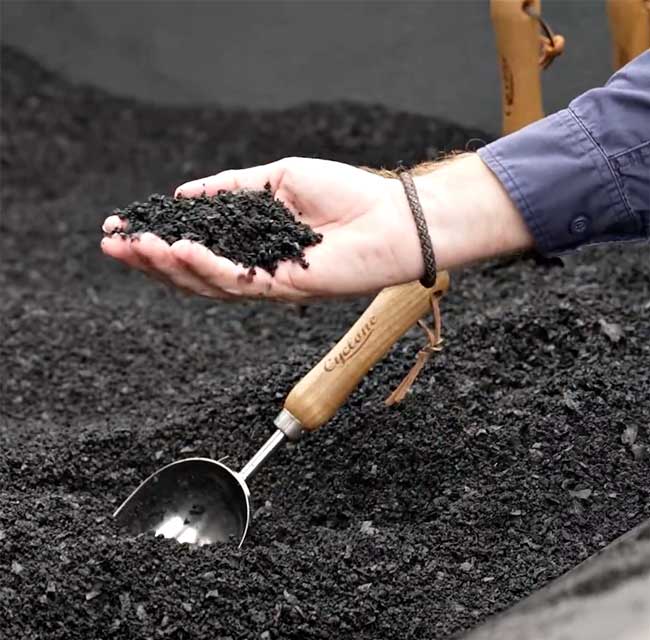
After four years of biochar production, Logan City Council is still on the search for someone to buy the city’s poo — or, more precisely, the odourless, charcoal-like product it makes from it.
The council has called for expressions of interest from buyers with viable, sustainable and commercially attractive uses for its biochar pellets.
Biochar is made by drying out and then heating treated sewage sludge to destroy pathogens and create an odorless, sterile pellet that locks in carbon and can be used as a soil improver or to add strength to bricks, concrete and asphalt.
The search for a buyer for the biochar comes four years after Australia’s first full-scale biosolids gasification facility opened at the Loganholme Wastewater Treatment Plant in 2022.
The $28 million facility was funded by the council with a $6.2 million grant from the Australian Renewable Energy Agency.
The council was widely reported as calling for its first biochar tender in 2021, but biochar use was limited until the State Government introduced guidelines for its use in the Queensland End of Waste Code for Biochar in May 2025.
A Logan City Council spokesperson said commercial opportunities had been limited without the dedicated end-of-waste code, which allows biochar to be used as a resource rather than managed as a waste product.
“As pioneers of this Australian-first technology, we’ve also been breaking new ground in how biosolids are processed, while the regulatory framework around biochar has continued to evolve,” the spokesperson said.
“The introduction of the biochar end-of-waste code creates opportunities that simply weren’t available when this project first started.”
The council is seeking tenders for its biochar for building products and materials; construction and operation; farming and animal services and equipment and; horticulture and arboriculture.
Logan Water’s Final Knowledge Sharing Report into the biosolids gasification project says blending biochar into a soil supplement for the agricultural sector will yield the best financial returns.
The report says creating biochar has changed the way the council disposes of wastewater.
Before the biogas facility was built, the council transported six truckloads of biosolids a day to the Darling Downs to be used as a soil additive on agricultural land.
“At the time of developing the business case for gasification, haulage costs were approximately $1.8 million per annum,” the report says.
The gasification process reduces the volume of biosolids by 90%, creating 3000 tonnes of biochar each year, the report says.
Most of the mass evaporates as steam or is turned into biogas. The biogas is then combusted at temperatures of 800C-850C to generate the heat energy to run the dryers, the report says.
Tenders for the biochar close Tuesday 8 September.
Subscribe to stay up-to-date with news from across Logan. You’ll receive a link to our digital newspaper direct to your inbox each week. It’s free.
Follow MyCity Logan on Facebook and Instagram