


The sound of artillery has followed conscript artilleryman Jeff Newlove for decades.
The hardest fight, he says, began long after the guns had stopped.
Mr Newlove was a young husband and father when his birthdate came up in Australia’s national service ballot, leading him into the Citizens Military Force, or CMF, as a national serviceman.
He did not return from a foreign battlefield, but the army followed him home — in hearing damage from years beside field guns and protection too crude to stop the blast.
On the gun line, a blast did not care whether a man was regular army, full-time national service or CMF.
“A gun going off with them is the same as a gun going off with me,” Mr Newlove said.
“It was like putting your head inside a 44-gallon drum while someone belted the outside with a sledgehammer.
“Hearing protection was a piece of wax … full up with cotton wool.
“You could only wear one because you had to hear the orders.”
His job on the guns was loader — the blast close enough to feel through the entire body.
“I’ve seen a bloke’s Dixie meal lunch flip over from the percussion of the guns,” Mr Newlove said.
“You don’t realise the damage until it’s too late.”
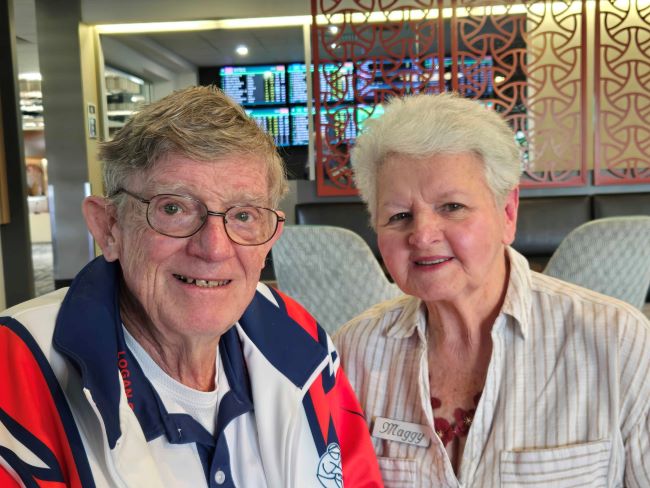
Now in his 70s, he wears the results from a different fight: a cochlear implant to help him hear that he and his wife, Maggy, say came after four years pushing for a White Card.
“Being an artilleryman, he was deaf,” Mrs Newlove said.
“We fought four years to get a White Card for his hearing.
“Since then, everything for his hearing has been free.”
Mrs Newlove said the hearing support would have cost tens of thousands without the card, but the fight was about more than money; it was about recognition for service that disrupted work, family and more than 50 years of health impacts.
Mr Newlove entered service in 1968 through the CMF pathway, completing six years of part-time service instead of two full-time.
However the commitment wasn’t light, with Tuesday night parades, weekends, annual camps and training alongside jobs, marriages and young families.
He said those who failed to meet their obligations faced the constant threat of prison time, a warning repeated often enough that no one forgot it.
“They had prison hanging over your head all the time,” he said.
“They used to remind you that if you didn’t do the right thing, that jail’s there.”
Mr Newlove said he did not see himself as a warrior, but the army still left marks.
“They teach you to be a killer,” he said.
“That does come to mind every now and again.”
Mrs Newlove remembers the costs closer to home.
“He went on camp and our daughter was commando-crawling across the floor like babies do,” she said.
“He came home two weeks later and she walked to the door to meet him.
“He missed all of that.
“National service affected a whole generation.
“The men had an obligation to do their duty, but the people looking after them didn’t seem to have the same obligation.”
For years, Mr Newlove was part of a largely unrecognised group: CMF Nashos.
It was not until he attended a Nasho Fair Go meeting that he realised even among overlooked national servicemen, CMF men had been largely invisible, but that didn’t need to be the case.
Nasho Fair Go has been campaigning for men conscripted between 1965 and 1972, including those who did not serve in Vietnam or completed CMF service.
Mrs Newlove said Mr Newlove’s category made the White Card fight harder.
“Other Nashos have got theirs, but Jeff being a CMF Nasho is in a different category again,” she said.
Mrs Newlove said White Cards were condition-specific and linking conditions to service could be difficult decades later, especially with incomplete records.
“I went to get my medical records, and there was none,” he said.
Mrs Newlove said they wanted recognition of the service by all Nashos, even if it sat on the margins of Australia’s military memory.
“It’s just getting the recognition that what they did wasn’t something to be swept under the carpet,” she said.
——-
Former Nashos, their families, or anyone who knows a former national serviceman can contact Nasho Fair Go via their website or the Department of Veteran Affairs on 1800 VETERAN.
Subscribe to stay up-to-date with news from across Logan. You’ll receive a link to our digital newspaper direct to your inbox each week. It’s free.
Follow MyCity Logan on Facebook and Instagram