


The buzz that sustains Australia’s agricultural heart is fading.
In an emotional open letter to the community and policymakers, local beekeepers have issued a stark warning: “Australia’s beekeeping industry is hurting”.
What was once a low intervention industry has been transformed into a relentless battle against the Varroa mite, a pest that is currently devastating honey bee populations across the Logan region and beyond.
The scale of the crisis is staggering.
In Logan alone, it is estimated more than 2500 honey bee hives have died in the past six months due to the mite and its associated impacts.
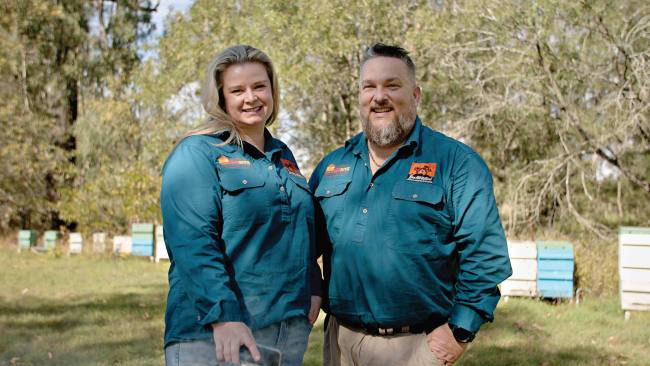
Local experts, including Jason Roebig, from Flagstone business Bee All Natural, predict the worst is yet to come, estimating 85% to 90% of Logan’s bees will be lost in the next two to three months.
For Mr Roebig, the statistics are deeply personal.
Over the past three months, his family business has lost more than 60% of its honey bee colonies.
In one devastating instance, Mr Roebig returned from a beekeeping conference to find another 45 hives had perished.
“These are not simply boxes of bees,” Mr Roebig says.
“They represent years of breeding, countless hours of work, significant financial investment and millions of pollinators that once contributed to our local food systems.”
The current crisis is exacerbated by what beekeepers believe is a second incursion of a Varroa mite strain that is resistant to existing treatments.
Even with intense, non-synthetic management and weekly treatments, hives are failing.
The mites weaken the colony until the small hive beetle takes over, laying eggs that hatch and turn the hive into a putrid brown sludge known as a “slime out”.
“No matter what you do, this mite is just running rampant,” Mr Roebig said.
He explained that fermented honey and dying bees created an environment where the colony eventually vacated or perished.
Mr Roebig warns that while the loss of bees is a tragedy for beekeepers, the broader impact on the community is looming.
Australia’s managed hives support the pollination services that underpin much of the nation’s agriculture.
Ms Roebig warns the lack of pollinators this growing season may lead to significantly lower crop yields for farmers.
“The cost of food is going to go up,” Mr Roebig said.
“Farmers will have less yield to sell, which means the supply and demand comes into effect, and the price of Australian food will start going up.”
He said the gravity of the situation may not be fully understood by the public until it starts impacting on our food security.
Despite the dire outlook, beekeepers report a lack of government financial support.
The cost of keeping bees alive has become unsustainable; while Mr Roebig spends roughly $2000 a month on treatments for his reduced stock, larger commercial beekeepers are facing bills of $30,000 to $40,000 per month, he said.
Mr Roebig stressed the industry was not looking for a bailout, but rather urgent assistance in the form of subsidised treatments and funding for research.
Without intervention, the agricultural system faces a precarious future.
“If [we] don’t do something about this, [we’re] going to be in a lot of trouble,” Mr Roebig said.
Subscribe to stay up-to-date with news from across Logan. You’ll receive a link to our digital newspaper direct to your inbox each week. It’s free.
Follow MyCity Logan on Facebook and Instagram